

The Center's research addresses the complex challenges shaping the fields of environment and climate in Israel and around the world. Through interdisciplinary and applied research, the Center generates knowledge and innovative tools that help shape advanced regulation and promote science-based environmental and climate policy in Israel.

Dr. Bee Baharier - Forever Chemicals in the Hydrogen Energy Sector: A Regulatory and Quantitative Analysis of the Impact of Restrictions and Technological Substitution Pathways
Research category: Renewable Energy
Dr. Bea Baharier is a planetary geochemist and astrobiologist whose work bridges planetary science, sustainability, environmental law, and ethics. Her scientific research examines life in extreme environments, planetary habitability, and the environmental conditions that may support life on Earth and other planets. She holds an MSc in Geochemistry from the University of St Andrews in Scotland and a PhD in Planetary Science and Astrobiology from the Open University, UK. She is currently a Postdoctoral Research Fellow at the Centre for Environmental and Climate Law at Bar-Ilan University.

Beyond the Capital Market: The Next Generation of ESG Practice
Research category: Climate Policy
Dr. Chaim is an Assistant Professor at the Bar-Ilan Law Faculty.
Her research focuses on corporate law, corporate governance, and capital markets, with particular emphasis on the regulatory challenges arising from the significant transformations that capital markets have undergone over the past two decades. Within this framework, she analyses the implications of changes in the ownership and control structures of public companies for corporate behaviour, including ESG matters.

The Use of Digital Technologies and Artificial Intelligence for Environmental Enforcement
Research category: Environmental Enforcement
This research addresses digital tools used for environmental enforcement, focusing on which digital tools can be used in environmental enforcement and the challenges involved in using them. The study examines at which stages of enforcement digital tools are appropriate, how their use affects important values such as equality, proportionality, and fairness, what risks are involved in using these tools, and how this fits within the principles of smart regulation.
Less Coercion, More Influence: Autonomy in Promoting Environmental Initiatives
Research category: Environmental Enforcement
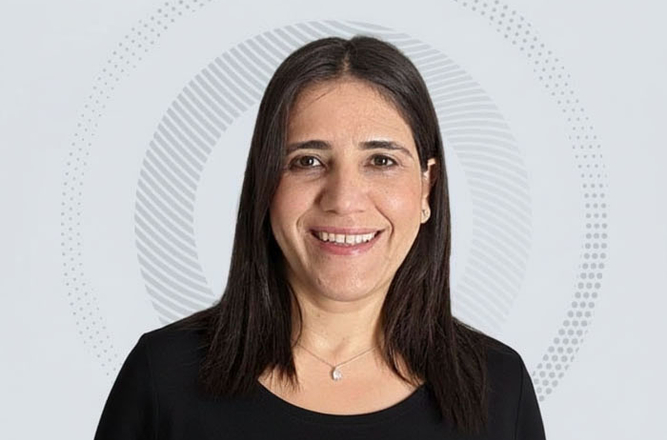
Dr. Dikla Perez is a researcher in consumer behaviour and sustainability communication at the Graduate School of Business Administration, Bar Ilan University. Her research focuses on how marketing and policy messages shape environmental perceptions and consumer decision making, with a particular emphasis on sustainability initiatives and pro environmental behaviour.

Regulating Israel's Waste Sector: Developing a New Policy Framework for Municipal Solid Waste Management in Israel
Research category: Waste Crisis
Dr. Riva Waldman is a researcher in waste management policy and environmental communication, focusing on promoting a holistic approach to complex challenges. Her doctoral research examined the economic and social benefits of household waste separation behavior.
She is the founder and operator of the “Trash Talks” initiative, making environmental knowledge accessible and actionable in everyday life, and has previously held senior management positions at Hiriya Recycling Park, the Ministry of Education, and the Municipality of Ramat Gan.
Local Communities and the Climate Crisis: The Case of the Urban Heat Island
Research category: Distributive Justice
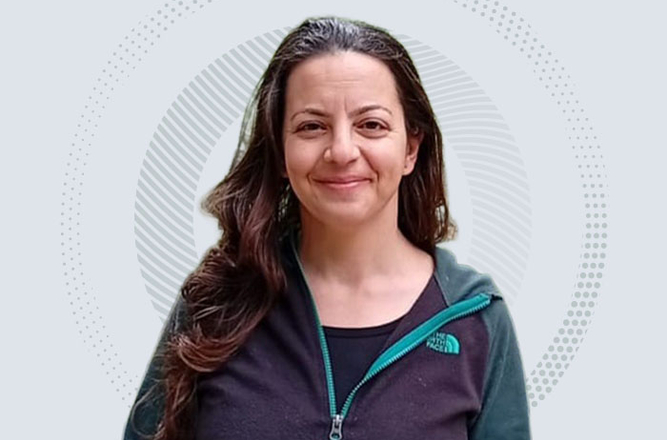
Dr. Hilah Segal-Klein is a researcher working at the intersection of society, environment, and politics. Her work explores how environmental practices and everyday decisions are shaped by the interplay between individuals, communities, and broader socio-political contexts. Using qualitative approaches, she focuses on the emotional, social, and identity-based dimensions of practices such as food consumption and waste, and examines what enables – or constrains – the adoption of more sustainable behaviors.

Mapping, Research, and GIS Technologies Expert
This study will develop an innovative and applicable methodological framework that integrates three core dimensions: environment, regulation, and space. The proposal is grounded in the argument that GIS technologies are not merely a technical tool for displaying geographic information, but an analytical platform that links environmental phenomena, regulatory arrangements, and spatial context. In doing so, they support processes of monitoring, enforcement, planning, decision-making, and policy design.

Prof. Oren Perez