

In our clinical studies, we examine how working with parents during their child’s therapy can support positive change. We specifically focus on parental mentalization—the ability of parents to better understand their child’s inner world, including thoughts, feelings, and intentions. By tracking families throughout the therapeutic process, we aim to understand what helps parents feel more secure and connected to their children, and how strengthening these capacities contributes to more effective treatment.
This research area is led by Dr. Shimrit Daches and Professor Yari Gvion.
Family TRIP (Family Trauma-Informed Resilience Program)
Family TRIP is a research-based, short-term therapeutic intervention for families coping with the aftermath of the events of October 7th, the "Iron Swords" war, and prolonged reserve duty. The project is funded by the Weil Fund for Social and Volunteer Projects at the university, the "Reserve Wives" Forum, and Canadian Friends of Bar-Ilan University.
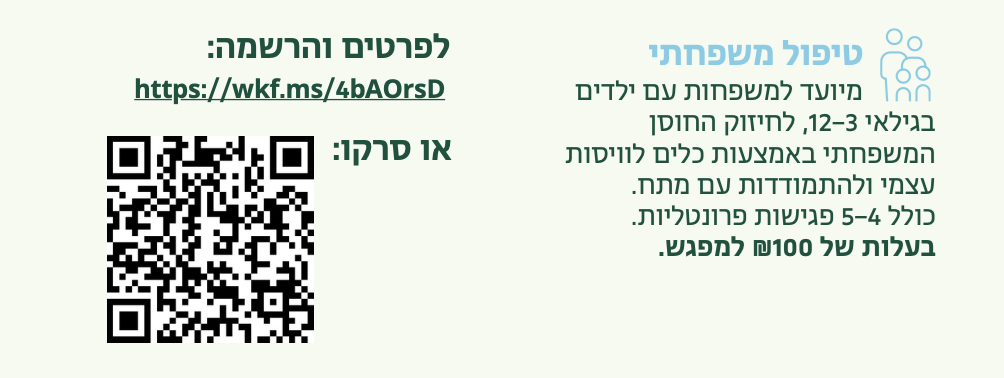
The program is designed for families with children and adolescents (ages 3–15) experiencing stress, anxiety, or emotional distress. The model consists of 4–5 sessions (60–90 minutes each) and integrates work with parents as attachment figures and agents of change, alongside joint parent-child sessions.
The intervention focuses on:
-
Emotional regulation
-
Developing age-appropriate emotional discourse
-
Strengthening the sense of security and safety
-
Narrative processing of the experience
This approach is rooted in the understanding that trauma affects the entire family system and that healing occurs within significant relationships.
Clinical Evaluation and Impact
The protocol is accompanied by a clinical evaluation study involving 120 children to date. Results indicate a dramatic decrease in child distress and significant improvement in daily functioning. Additionally, findings show a reduction in parental stress and anxiety, alongside improved parenting strategies. Families have reported a strengthened bond, an improved family atmosphere, and a renewed sense of closeness.
Currently, the program is expanding into community activities with the goal of providing a response to hundreds of additional families in the coming years, aiming to make trauma-focused family therapy accessible as part of Israel's public health system.
This research is led by Dr. Tamar Silberg, Dr. Tali Gev, and Prof. Rachel Dekel.