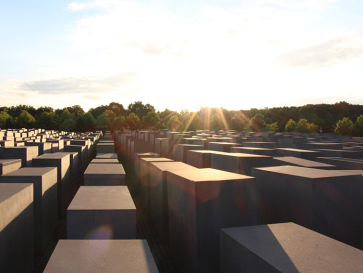
Welcome to the Professor Zehavit Gross Research and Intervention Laboratory

Welcome to the Professor Zehavit Gross Research and Intervention Laboratory

Welcome to the Professor Zehavit Gross Research and Intervention Laboratory

Advancing Education at the Intersection of Identity, Memory, and Democratic Responsibility

Prof. Zehavit Gross’s Research and Intervention Laboratory is at the forefront of basic and applied research in religious education, interfaith education, values education, peace education, and Holocaust education among adolescents and university students in both formal and informal educational diverse settings.

The laboratory investigates complex socialization processes — religious, civic, national, cultural, and gendered — with a particular focus on identity formation during adolescence and emerging adulthood in diverse, polarized, and post-conflict societies. A central research strand engages with “difficult knowledge” — traumatic histories, contested memories, and moral dilemmas that challenge learners emotionally, ethically, and intellectually. The lab also pioneers research on religious bullying, analyzing its unique dynamics and its impact on belonging, resilience, and social cohesion in multicultural environments.
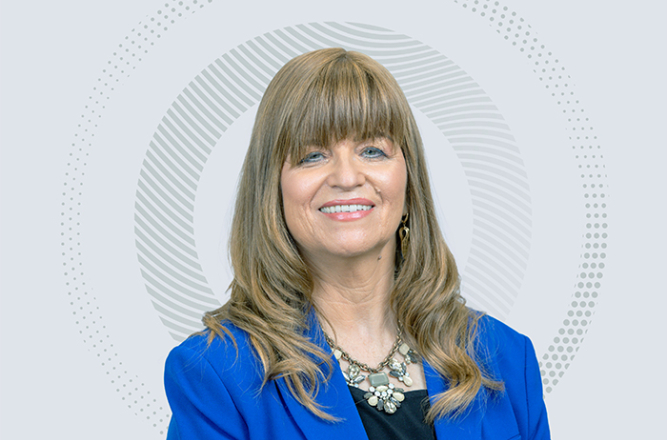
Zehavit Gross

Director- Professor Zehavit Gross

ounder and Director, Zehavit Gross Research and Intervention Laboratory. UNESCO Chair in Education for Human Values, Tolerance and Peace. Former Dean, Faculty of Education.

International scholar in religious education, peace education, Holocaust pedagogy, and interfaith dialogue. Her work integrates philosophy, empirical research, and immersive technologies to develop educational interventions for adolescents and university students in diverse and conflict affected societies. Head, Sal Van Gelder Center for Holocaust Instruction and Research. Published widely in leading journals and serves as a global advisor on values education, social cohesion, and democratic citizenship.

Research Areas

Religious Education

Peace Education

Holocaust Education and Difficult Knowledge

Recent Publications

Amram-Asherov, E., & Gross, Z. (2026). Civic Engagement Among Jewish and Arab Youth in Israel: The Impact of Participating in Youth Councils and Nonformal Education Frameworks. Peace and Conflict. https://doi.org/10.1037/pac0000837
Luria, E., Rothgangel, M., & Gross, Z. (Accepted/In press). Reflecting on Virtual Reality in Holocaust education in Israel: a meta-reflection using the Six Thinking Hats. Israel Affairs. https://doi.org/10.1080/13537121.2025.2593358
Shamma, F., & Gross, Z. (2026). The effect of distance learning on parent–adolescent relationships in Arab society during and after the COVID-19 pandemic. Sociological Spectrum, 46(2), 75-97. https://doi.org/10.1080/02732173.2025.2604071
עמרם אשרוב, ע., & גרוס, ז. (2025). מעורבות אזרחית בקרב בני נוער יהודים וערבים: השפעת ההשתתפות במסגרות בלתי פורמליות ובמועצות הנוער. In ר. גינוסר, & ע. גרופר (Eds.), עמנואל: איש הכפר ומחנך בעל חזון (pp. 89-95). אפשר, עמותה לפיתוח שירותי רווחה וחינוך. https://kitvei-et.efshar.org.il/wp-content/uploads/%D7%A2%D7%9E%D7%A0%D7%95%D7%90%D7%9C-%D7%90%D7%99%D7%A9-%D7%94%D7%9B%D7%A4%D7%A8-%D7%95%D7%9E%D7%97%D7%A0%D7%9A-%D7%91%D7%A2%D7%9C-%D7%97%D7%96%D7%95%D7%9F.pdf

Bridging Divides | The Faculty of Education at Bar-Ilan University

Bridging Divides | The Faculty of Education at Bar-Ilan University

The Faculty of Education at Bar-Ilan University, Israel, has been undertaking strategic planning deeply rooted in the core values of equity, inclusion, diversity, and social justice. These principles drive every aspect of our work as we strive to emp

Contact Us

Optional Subtitle