

Fields of interests
The research interests in the lab focus on studying the functional interactions between viral proteins and the cellular machinery, which control both the viral life cycle and tumorigenesis. Approximately 15% of human cancers are linked to viral infections. The viruses we study are the human gamma herpesviruses, Kaposi’s sarcoma-associated herpesvirus (KSHV, HHV-8), and Epstein-Barr virus (EBV, HHV-4), which are associated with an increasing number of human malignancies. EBV is a ubiquitous virus that infects over 90% of adults worldwide, including in Israel. KSHV prevalence varies significantly depending on the geographic regions; in Israel, about 10% are infected. While in most infected individuals, these viruses do not lead to cancer development, under specific conditions, such as immune system suppression, they promote cancer development. The goal of our lab is to expand our understanding of viral infections and to apply this knowledge to the development and use of drugs that specifically target virally infected cells.
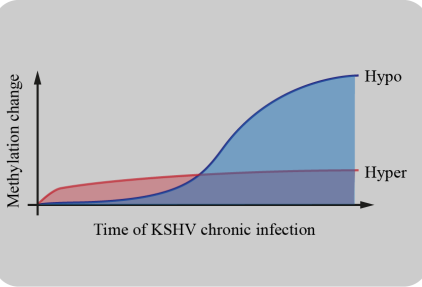
We have a specific interest in understanding how these viruses modulate our epigenome. Epigenetic marks, including DNA methylation, histone modifications, and chromatin remodeling, play a crucial role in regulating gene expression. Together with genetic alterations, epigenetic modifications play a significant role in the development of many diseases, including cancer. We perform gene-specific and whole-genome DNA methylation analysis, combining these with whole-transcriptome (RNA-seq) analysis to reveal the impact of viral infection on DNA methylation and gene expression.
Human endogenous viral elements (EVE) or transposable elements (TEs), as their name suggests, can transpose (jump) within their host genome. They are ubiquitous in eukaryotic genomes, occupying about 45% of the human genome. Specifically, LINE-1 is still jumping in our genome, and its expression correlates with tumor development. We have found high LINE-1 expression in KSHV-associated primary effusion lymphoma (PEL) cells. Interestingly, knockdown of LINE-1 expression abrogates tumor growth.
Examples of scientific questions we ask:
1. What are the global epigenetic changes these viruses impose on infected cells during tumor development?
2. Which epigenetic marks differentiate infected cells from infected cells that become cancerous? The results of these studies will help us to develop novel methods for the detection of viral-associated malignancies.
3. How does an exogenous virus like KSHV modulate the expression of human endogenous viruses (transposable elements)?
4. After reading the above, if you have a scientific question related to our study, let’s talk about your next project.