

The Psychotherapy Research Laboratory, directed by Prof. Dana Atzil-Slonim, is part of the Department of Psychology at Bar-Ilan University.
We study the intrapersonal and interpersonal dynamics that unfold during psychotherapy, with the goal of understanding how people change in treatment and the mechanisms that make such change possible. At the heart of our work is the question of how patients’ and therapists’ emotions, behaviors, thoughts, and needs influence one another moment by moment, and how these interactions give rise to meaningful therapeutic change.
Our research integrates contemporary clinical theory with advanced research methods and tools from Artificial Intelligence (AI), Natural Language Processing (NLP), Machine Learning (ML), and multimodal analysis of language, voice, video, questionnaires, and physiological signals. Using these approaches, we analyze a rich collection of naturalistic psychotherapy data that includes both verbal and nonverbal information collected throughout the course of treatment. This integration enables us to examine therapeutic processes in depth and at scale, and to identify the patterns and mechanisms that promote change and recovery.
Our goal is to advance the scientific understanding of human change and to contribute to the development of approaches and tools that support more precise, personalized, and responsive mental health care.
Fields of Interest
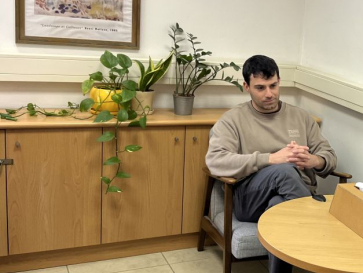
Multimodal Intrapersonal dynamics
In-session emotional flexibility and self-regulation: how within-person dynamics shape outcomes.
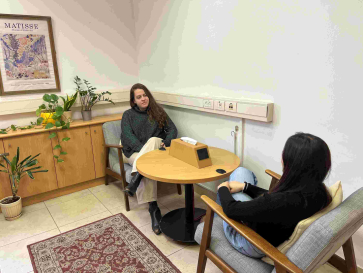
Multimodal Interpersonal dynamics
In-session synchrony and co-regulation: how coordination in the therapeutic relationship shapes outcomes.
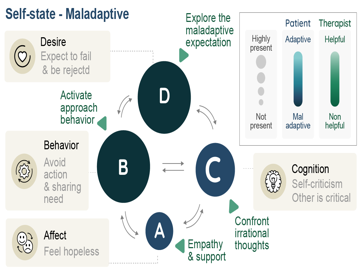
MIND Framework
MIND: a shared process language for identifying intrapersonal and interpersonal dynamics linked to therapeutic change.
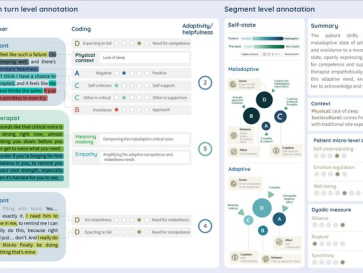
Leveraging AI in Psychotherapy to Advance Mental Health
Using AI, NLP, and machine learning methods for scalable, automated multimodal psychotherapy research.
Monitoring, prevention, and early detection
Computational linguistics to support mental health monitoring in naturalistic settings.

Real-time feedback for therapists
Supporting therapist responsiveness by integrating context, intervention, and impact
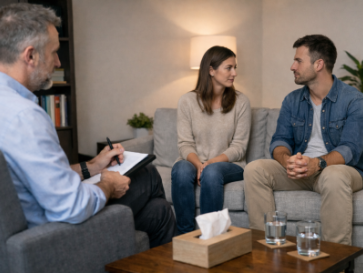
Dynamics across relationships
Do couples and therapeutic dyads share the same “helpful” interaction sequences?