


Can AI help us understand how people change in therapy?
Can AI help us understand how people change in therapy?
This talk explores how clinical theory, psychotherapy research, and AI can be combined to study the moment-to-moment dynamics that drive therapeutic change using the MIND framework
How does change happen in psychotherapy?
How does change happen in psychotherapy?
Drawing on the MIND framework, this talk explores how AI can help reveal the moment-to-moment dynamics that shape therapeutic change and contribute to more personalized mental health care
Emotional Synchrony and Co-regulation between Therapist and Patient: From Theory to Practice, Research, and Back
Emotional Synchrony and Co-regulation between Therapist and Patient: From Theory to Practice, Research, and Back
Psychotherapy is a dynamic process of mutual influence and regulation. Our research examines emotional, behavioral, and physiological synchrony between patients and therapists, and how moment-to-moment interactions contribute to therapeutic change
Dynamic Dyadic Processes in Psychotherapy by Dana Slonin-Atzil
Dynamic Dyadic Processes in Psychotherapy by Dana Slonin-Atzil
Therapeutic change emerges through ongoing patient–therapist interactions. Our research examines synchrony, co-regulation, flexibility, and mutual influence using multimodal and AI-based methods to understand processes underlying change and recover
Shalvata Mental Health Center Conference: Challenges and Opportunities – Dr. Dana Atzil-Slonim
Shalvata Mental Health Center Conference: Challenges and Opportunities – Dr. Dana Atzil-Slonim
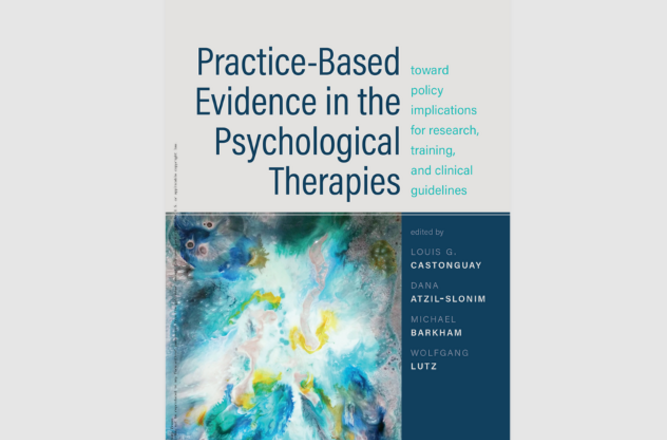
Featured Book
Practice-Based Evidence in the Psychological Therapies (Oxford University Press), co-edited by Louis
G. Castonguay, Dana Atzil-Slonim, Michael Barkham, and Wolfgang Lutz, brings together leading
international experts to present contemporary advances in psychotherapy research. The volume
highlights practice-based evidence as a foundation for understanding mechanisms of change and
shaping the future of research, clinical training, and mental health care.