


Helicobacteri pylori in Gastric Cancer development
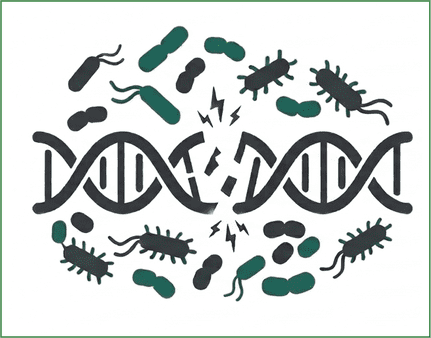
Gastric Cancer (GC) causes 700,000 annual deaths. A major GC risk factor is an early infection with Helicobacter pylori (H.pylori). Traditionally, the oncogenic potential of H.pylori has been attributed to its capacity to induce inflammation in the host cell. However, the fact that the presence of H.pylori is not required for the maintenance of the neoplastic phenotype once initiated suggests that H.pylori-mediated carcinogenesis follows “Hit-and-run” mechanism that leaves a persistent signature on cells that maintains the cancerous process upon its clearance. Such long lasting oncogenic information is likely to be mediated by inheritable chromosomal changes, that – in turn – are initiated by DNA breakage. Our goal is to connect the dots between the bacterial infection, DNA damage, and the genetic background of GC.
Read more:
Sibony-Benyamini, Hadas ; Jbara, Rose ; Shubash Napso, Tania et al. / The landcape of Helicobacter pylori-mediated DNA breaks links bacterial genotoxicity to its oncogenic potential. In: Genome Medicine. 2025 ; Vol. 17, No. 1.