


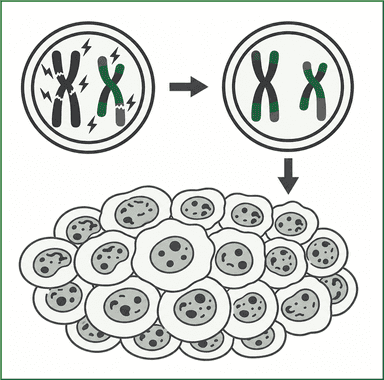
DNA damage does not strike the genome randomly. Our lab investigates why specific genomic regions are disproportionately vulnerable to damage and how this non-random susceptibility drives the earliest stages of carcinogenesis. By analyzing DNA sequence, chromatin architecture, and essential processes like transcription and replication, we define the mechanisms that convert transient DNA lesions into the persistent structural changes fueling cancer.
Read more:
Sibony-Benyamini, Hadas ; Jbara, Rose ; Shubash Napso, Tania et al. / The landcape of Helicobacter pylori-mediated DNA breaks links bacterial genotoxicity to its oncogenic potential. In: Genome Medicine. 2025 ; Vol. 17, No. 1.
Canela, Andres ; Maman, Yaakov ; Huang, Shar yin N. et al. / Topoisomerase II-Induced Chromosome Breakage and Translocation Is Determined by Chromosome Architecture and Transcriptional Activity. In: Molecular Cell. 2019 ; Vol. 75, No. 2. pp. 252-266.e8.
Tubbs, Anthony ; Sridharan, Sriram ; van Wietmarschen, Niek et al. / Dual Roles of Poly(dA:dT) Tracts in Replication Initiation and Fork Collapse. In: Cell. 2018 ; Vol. 174, No. 5. pp. 1127-1142.e19.
Canela, Andres ; Maman, Yaakov ; Jung, Seolkyoung et al. / Genome Organization Drives Chromosome Fragility. In: Cell. 2017 ; Vol. 170, No. 3. pp. 507-521.e18.