


Research Period: 2011–2016
This research, which constituted my doctoral dissertation, examined the politics of pride and shame across four diverse spaces of LGBTQ+ activism in Israel. It integrated critical and post-structuralist theories with queer ethnographic methodology. The study moves beyond the conventional discussion focused on the necessity of LGBTQ+ activism or the challenges faced by activists, instead exploring power relations and internal struggles within the activist spaces themselves.
The findings demonstrate that the creation of a sense of belonging in these spaces is shaped through discourses of inclusion and exclusion. Within the research, I identified five spatial-political models that develop along national, geographic, and gender axes. These models reveal the central role of space in shaping LGBTQ+ politics, with particular emphasis on the dichotomy between center and periphery:
-
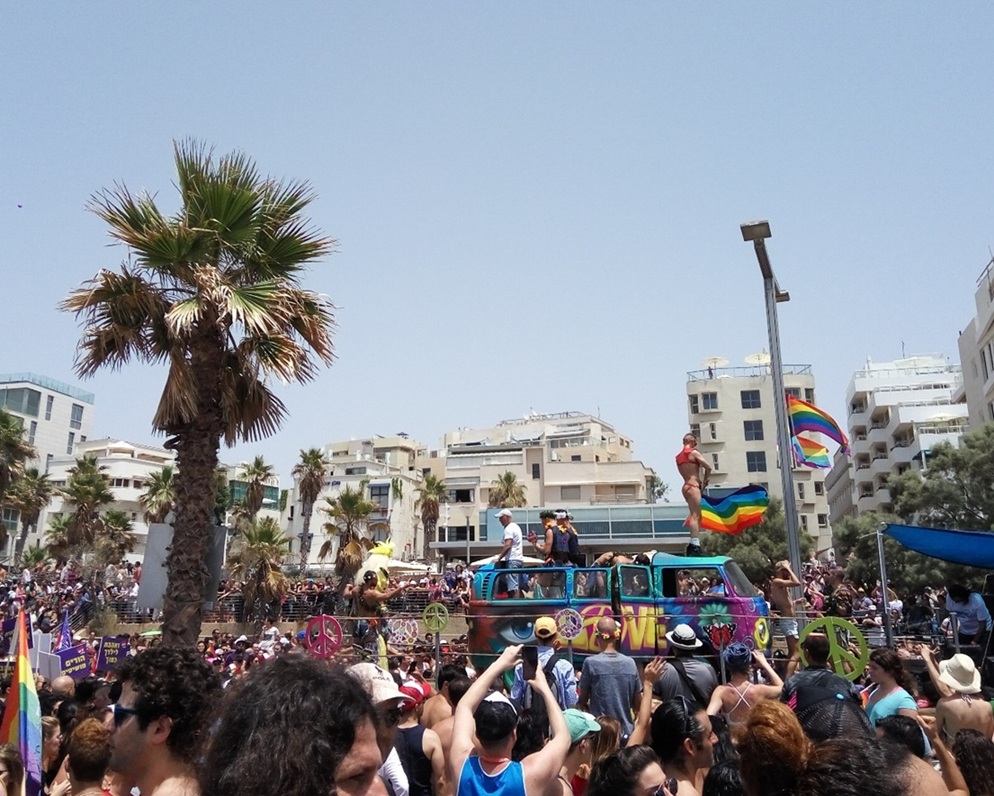
Homonormative politics operate through the concentration of power and recognition discourse of LGBTQ+ individuals as part of the city/nation, while simultaneously establishing municipal, symbolic, spatial, and material control (e.g., the gay center in Tel Aviv).
-
This homonormative politics produces social-spatial patterns that lead to the exclusion of lesbian, bisexual, and transgender activities as a consequence of the intersection of homonormative discourse with urban space.
-
Politics of holding emphasizes the unification of public and private politics, aiming to accommodate opposing views and diverse identities, and to create a sanctuary space through continuous balancing of norms and inclusivity, alongside managing social and normative boundaries and aspiring to increase visibility.
-
Politics of turning to the periphery challenges the center-periphery dichotomy and reveals the limiting consequences of Western-urban LGBTQ+ discourse on peripheral identities.
-
Politics of safe spaces involves the creation of protected LGBTQ+ spaces through the establishment of rules, restrictions, and selective exclusion, aimed at ensuring protection from physical, emotional, and social violence, and enabling a sense of belonging and security against internal and external harm.
Publications
הרטל, ג' (2018). פריפריה קווירית בישראל. תאוריה וביקורת 49 (חורף), 89-109
Hartal, G. (2016). The politics of holding: Home and LGBT visibility in contested Jerusalem. Gender, Place & Culture, 23(8), 1193-1206
Hartal, G. (2016). The Gendered Politics of Absence: Homonationalism and Gendered Power Relations in Tel Aviv's Gay-Center 1. In Lesbian Geographies (pp. 91-112). Routledge