


Research Period: 2015–2017
My postdoctoral research, supervised by Prof. Natalie Oswin at McGill University in Montreal, Canada, focused on the political economy of gay tourism to Tel Aviv. This work emphasized how global discourses, political and economic power relations, and processes of homonationalism operate in the city. The research was qualitative, based on ethnographic fieldwork within the gay tourism sector and the politics of gay tourism. It included participant observation, interviews, collection of cultural materials, and archival work.
Tel Aviv, Israel’s largest metropolis, is perceived as the central and even exclusive hub for the LGBTQ+ community in Israel. In recent years, the city has undergone a radical transformation in its approach to the community, demonstrated in part by significant investments from the municipality and the state to promote gay tourism. This interdisciplinary study explores the cultural, political-economic, ethnic, and urban implications of a largely understudied phenomenon, focusing on the strategic branding of Tel Aviv as a global city and a gay sanctuary within government campaigns such as “gay tourism” and Brand Israel.
The aim of the research was to examine how global gay tourism has transformed the social politics of space in Tel Aviv. It focused on the impacts of promoting the gay tourism industry and the consequent heightened visibility, both on Tel Aviv’s branding as a global city and on the sexual and cultural spaces of the local LGBTQ+ community. This qualitative study, the first of its kind in the Israeli context, contributes to contemporary academic discussions on sexual citizenship, belonging, globalization of sexuality, and city branding in Israel and worldwide.
Key findings:
-
Neoliberal interests and logic create new urban value around LGBTQ+ populations, viewing them either as economically and PR-worthy sources for investment or as dangerous, marginalized groups. Thus, urban neoliberal politics shifts focus from LGBTQ+ rights to their economic contribution.
-
The branding of Tel Aviv through gay tourism deeply influences the local LGBTQ+ community and the wider Israeli society.
-
Diverse uses of Israeli ethnicity by the municipality, the state, commercial entities, and LGBTQ+ people reveal gaps between orientalist images and processes of westernization, especially evident in how gay tourism to Tel Aviv is marketed. These gaps expose varying ways “modernity” and LGBT rights shape new ethnic and queer identities.
-
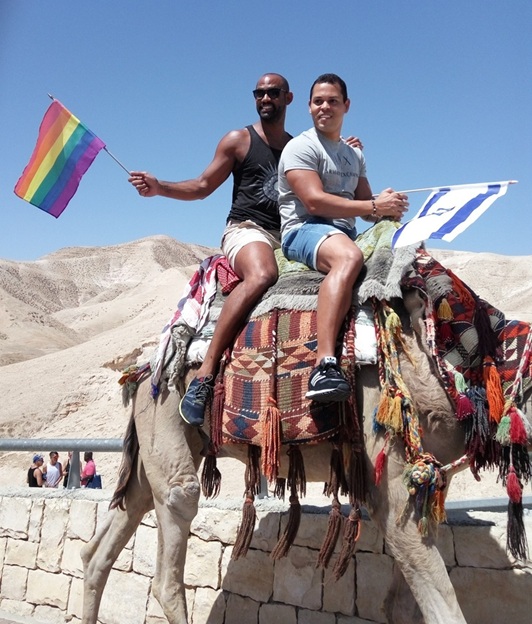
Day tours outside Tel Aviv construct orientalist, biblical, and exotic images of Israel, indirectly reinforcing Tel Aviv’s uniqueness as a “bubble.”
-
Gay tourism reproduces gendered power relations and exclusions, manifested in pride events, political struggles, and the influence of neoliberal politics on gender equality initiatives.
This research was supported by the Israel Science Foundation and the Bar-Ilan Postdoctoral Fellowship.
Publications
Hartal, G. (2019). Gay tourism to Tel-Aviv: Producing urban value?. Urban Studies, 56(6), 1148-1164