


Start Date: October 2019
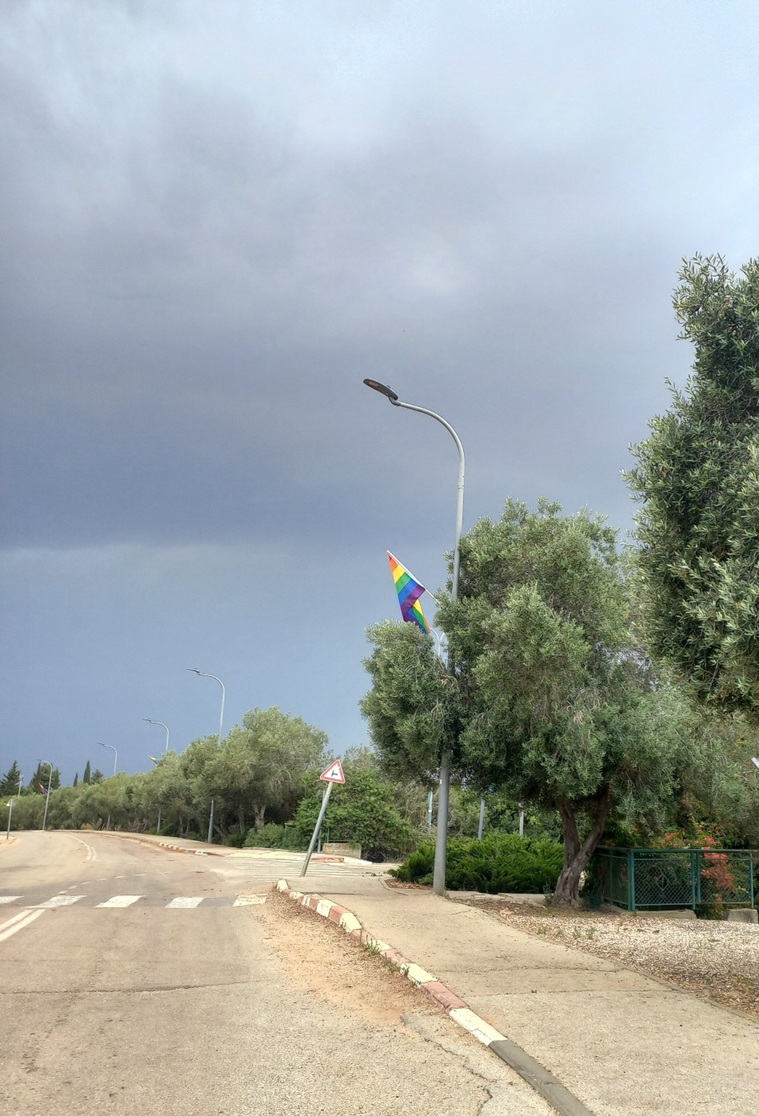
The study examines the political subjectivity of non-heterosexual women in peripheral and rural spaces in Israel, with the aim of formulating a queer epistemology that does not depend solely on the urban understanding of LGBTQ+ sexuality.
In recent decades, the question of LGBTQ+ subjectivity and its spatial expressions has become a central theme in sexuality studies across various disciplines. This research seeks to expand existing knowledge and propose an updated, complex, and multilayered perspective on the socio-spatial expressions of political subjectivity among non-heterosexual women.
The epistemology of the urban space is deeply connected to discourses of human rights, multiculturalism, and capitalism, and it has shaped the ongoing centrality of the city in LGBTQ+ identity and culture. In contrast, rural sexuality remains marginalized both in everyday life and in academic discourse. The geographical study of sexuality often privileges the city while neglecting the lived experiences and emerging identities within rural and peripheral spaces.
This study focuses on the Israeli periphery (made of rural areas and small towns), in an attempt to challenge the centrality of the city and to explore in depth the lives, cultures, and relationships of non-heterosexual Jewish women both with the urban LGBTQ+ community (real and imagined) and with the state.
Conducted in suburban areas, development towns, and rural regions, the research reveals important insights into the experiences of women living in these spaces, particularly regarding the central presence of LGBT-phobia in their everyday lives.
Another theoretical dimension examined is homonormativity, meaning the adoption of heteronormative norms within LGBTQ+ community discourses and practices. In practice, this means that only certain groups in the community benefit from the gains of rights struggles - mainly monogamous, middle- to upper-class couples, predominantly healthy (often white) gay men perceived as “model citizens,” as well as those who embody the popular image of “gay lifestyle” (such as parties, casual sex, drugs, and LGBTQ+ tourism). These two urban-derived patterns are rigid and exclusionary, and they especially disadvantage LGBTQ+ people living outside the city, making it far more difficult for them to find a place within this framework.
The study proposes a situated, sensitive, and nuanced reading of homonormativity politics in Israel’s periphery. Without claiming that all expressions of homonormativity are necessarily negative or problematic, it offers a critical perspective that makes it possible to understand the complexity of homonormative subjectivity—whether openly expressed or more subtle.
The research is based on qualitative in-depth interviews conducted between 2020 and 2022. The analysis focuses on the experiences of lesbian and bisexual women, both cisgender and transgender, and examines their political subjectivity, while attempting to decipher the relationship between the geography of sexuality and liberalism, as manifested in various formations of homonormativity.
Publications
Hartal, G., & Krauz, S. (2024). Homonormativity in Peripheral Spaces: LBT Women's Processes of Becoming Political Subjects. Tijdschrift voor economische en sociale geografie, 115(4), 505-517
Hartal, G., & Tzedek, Y. B. (2023). Liberal LGBTphobia in rural spaces: Israeli lesbian and bisexual women's relationality. Journal of Rural Studies, 102, 103096