


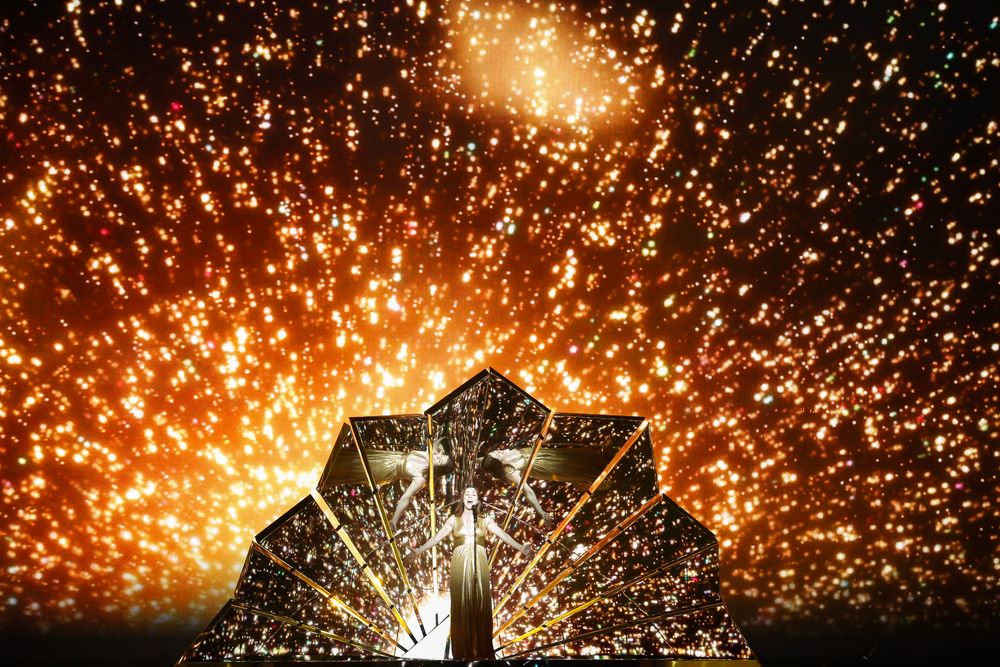
In another strand of my research, I focus on media events, and particularly on the Eurovision Song Contest, as an arena in which popular culture, nationalism, and politics intersect and at times collide. Viewing the media as a hybrid sphere in which the boundaries between “hard” and “soft” news are increasingly blurred, I examine how an event traditionally perceived as light entertainment can acquire weighty public meanings in periods of routine, crisis, tension, and conflict. In one of my empirical studies in this area, drawing on a combined quantitative and qualitative analysis of news items from leading news websites, I analyzed the news framing of Eurovision coverage in the years 2023–2025 against the backdrop of the Gaza war. The findings point to an accelerated politicization of soft news around the contest: the share of political framing rose from 13.7% in 2023 to a peak of 61.4% in 2024, and remained high in 2025 (48.6%), alongside the continued presence of sensational, gossip-oriented, and escapist frames. In this way, Eurovision emerges in my research not merely as a one-off entertainment spectacle, but as an ongoing space for the symbolic processing of collective tensions, in which political and national identities are negotiated through the language of popular culture.