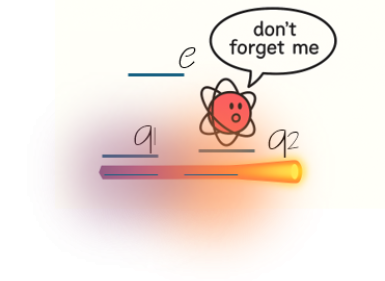
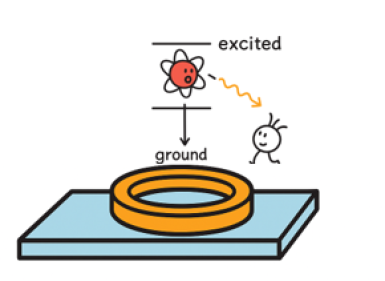
What are we going to do? Why? how?







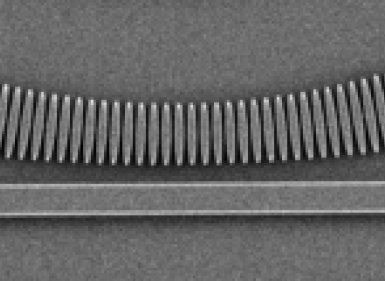


Our research group explores the interaction between atoms and nanophotonic structures, with the goal of achieving strong light–matter coupling and enhancing atomic coherence. We seek to develop a hybrid photonic–atomic platform on a chip that enables room-temperature quantum devices for computation, communication, and metrology. By employing high-Q microresonators, we enhance light–matter interactions, and through advanced nanofabrication, we optimize atomic coherence. Our work spans both theoretical and experimental studies of light–atom interactions at the nanoscale, aiming to deepen our understanding of these processes and overcome their current limitations in quantum technologies.

Why atoms?
Atoms offer a rich set of well-characterized and extremely narrow energy transitions that have been utilized for decades in nonlinear optics, metrology, quantum electrodynamics, timekeeping, and sensing. The most precise magnetometers and atomic clocks are based on these transitions, GPS systems rely on them for accuracy, and the first demonstrations of quantum electrodynamics were performed using atomic systems.

Why silicon photonics
We see two main motivations for integrating atoms with silicon photonics. The first is the “LEGO concept”—the vision of building quantum devices as easily as assembling LEGO bricks, enabled by standardized and compatible fabrication processes. The second is the pursuit of strong atom–photon interactions, achieved when photons circulate multiple times in a microcavity, enhancing their interaction with passing atoms.

Challenges ahead
Our main challenge comes from the fact that we have limited interaction time, especially with moving atoms. To overcome this, we must fabricate ultra-low-loss microcavities or develop methods to prolong atom-photon interactions.

communication and conversion
Photonic devices such as fibers, lasers, modulators, and amplifiers perform best at telecom wavelengths. In contrast, atoms interact with light across a wide range of non-telecom wavelengths. By combining atomic nonlinearities with the enhanced electromagnetic fields provided by nanophotonic structures, we aim to establish an efficient bridge between atomic technologies and the telecom domain.

What are we going to do?
We aim to prolong atom-light interactions by extending the optical mode, enhance the coupling using high-quality microcavities, and preserve atomic coherence as atoms bounce off nearby surfaces.
We are developing chip-scale quantum and photonic technologies, including atomic clocks, single-photon sources and detectors, frequency references, quantum memories, transducers, magnetometers, quantum gates, gyroscopes, optical parametric oscillators, and lasers.
Our goal is to integrate these devices onto a unified photonic platform-combining the precision of atomic systems with the scalability of modern nanophotonics-to enable practical, room-temperature quantum technologies.
Applications