


Active Research (starting October 2024)
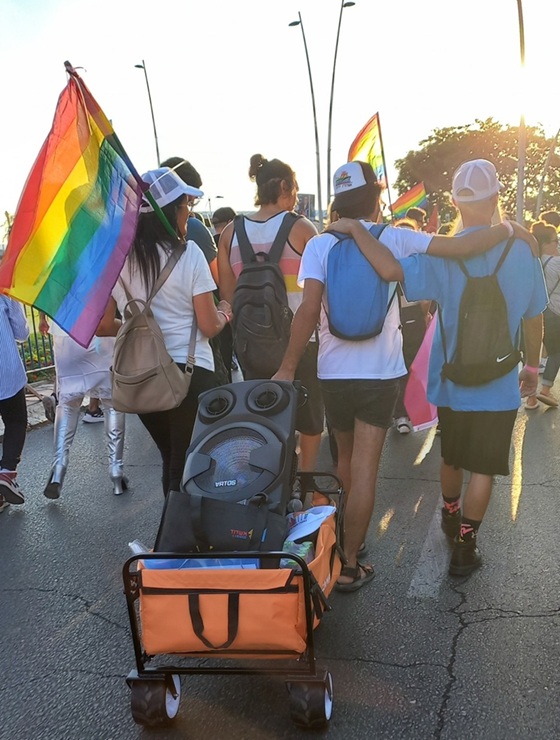
This study seeks to examine the experiences of sexual harassment among gay and bisexual men (cisgender and transgender) within nightlife spaces and LGBT activism organizations in Israel. Focusing on intersectionality and power dynamics, the research will investigate how LGBT spaces, perceived as safe environments, may generate complex affective atmospheres, and how sexual harassment is internalized and displaced within these spaces.
By analyzing how men perceive power relations, relativity, and vulnerability, the study aims to challenge the common assumption that men are only perpetrators of harassment, emphasizing the need for a nuanced and careful understanding of harassment within the LGBTQ+ community — especially in the Israeli context, where masculinity is closely linked to militarism, and LGBT rights face increasing threats.
Using a theoretical framework of "affective atmospheres," the research employs qualitative methods, including interviews and e-Relief Maps developed by María Rodo-Zarate, to explore the intersection of space, emotion, and power in incidents of sexual harassment.
This approach seeks to highlight the unique politics of sexual harassment within LGBTQ+ spaces, going beyond narratives of LGBT-phobia to also focus on intra-community dynamics. By examining spaces such as bars, clubs, parties, and LGBTQ+ activism sites, the study will reveal how these environments shape experiences of vulnerability and affect, contributing to the construction of safer spaces for men’s sexual cultures.
This research is supported by the Israel Science Foundation (ISF).