


How do cities, violence, and crime intersect? Urban criminology provides a critical perspective on the study of urban violence
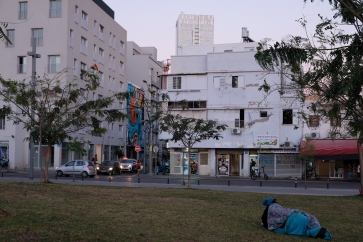
Urban criminology is a growing paradigm that seeks to bridge urban studies and criminology. It brings together urban planning, geography, sociology, and criminology to examine how processes of change in the urban space—as well as socio-spatial organization, inequality, and local histories—shape crime and violence. Zur has conducted extensive research on South Tel Aviv and is currently studying the crime crisis in Arab cities, focusing on the relationship between socio-spatial dynamics and violence.
Further Reading:
Zur, H. (2024) The concept of the ‘neighbourhood’ in crime and place theory and its influence on police strategy, Built Environment, Volume 50, Number 1, Spring 2024, pp. 95-113(19), https://doi.org/10.2148/benv.50.1.95
Zur, H. (2022). Policing temporality: Police reflection on the role of police in gentrifying a high-crime neighborhood, Urban Affairs Review, 59(3), 866-891. https://doi-org.ezp-prod1.hul.harvard.edu/10.1177/10780874221096748
Zur, H., & Hatuka, T. (2023) Local–Digital Activism: Place, Social media, Body and Violence in Changing Urban Politics, Social Media + Society, 9(2), 1-14, https://doi.org/10.1177/20563051231166443
Zur, H. (2024) Place-oriented digital agency: Residents’ use of digital means to enhance neighborhood change, Urban Studies, Special Issue on “Digitalization, Neighborhood Change, and Urban Social Processes,” Online first, https://doi.org/10.1177/00420980231224629