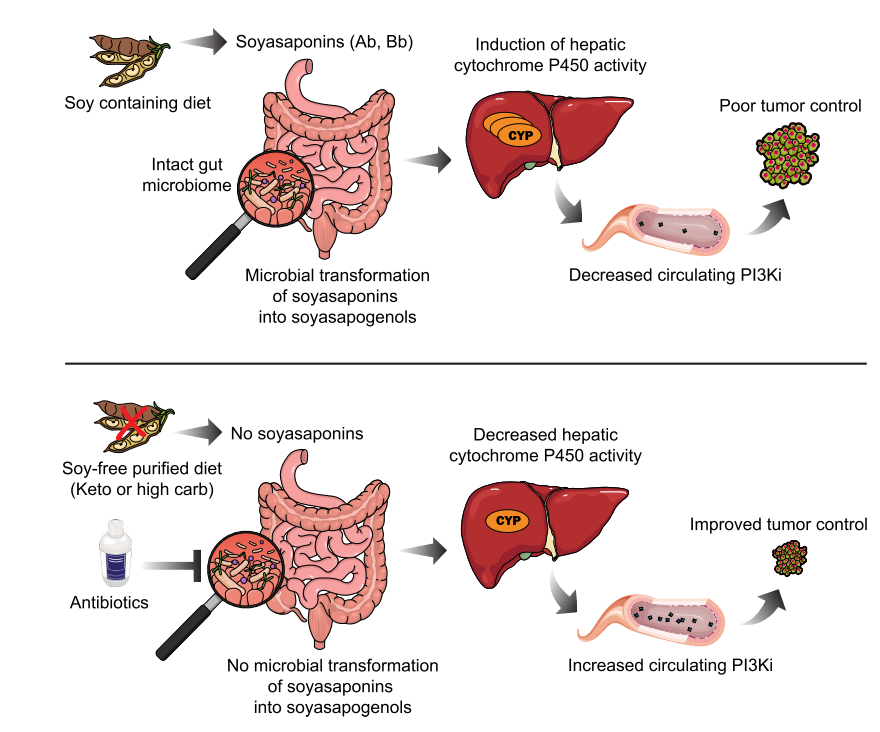


The liver is the first major organ exposed to many diet- and microbiome-derived metabolites and plays a central role in regulating whole-body metabolism and drug handling. We study how bioactive metabolites produced from diet and microbial activity influence hepatic physiology, including pathways involved in xenobiotic sensing, metabolic regulation, and drug clearance. A major goal of this work is to understand how variation in diet and microbiome activity contributes to inter-individual differences in pharmacology. Our recent work showed that microbiome-dependent metabolism of dietary phytochemicals can alter hepatic drug metabolism and reduce the efficacy of anticancer therapy (see Figure), highlighting a direct mechanistic link between nutrition, microbial chemistry, and pharmacokinetics. More broadly, we seek to define how the chemical environment reaching the liver shapes its function in health and disease, and how these processes can be leveraged to improve therapeutic response and precision medicine.