


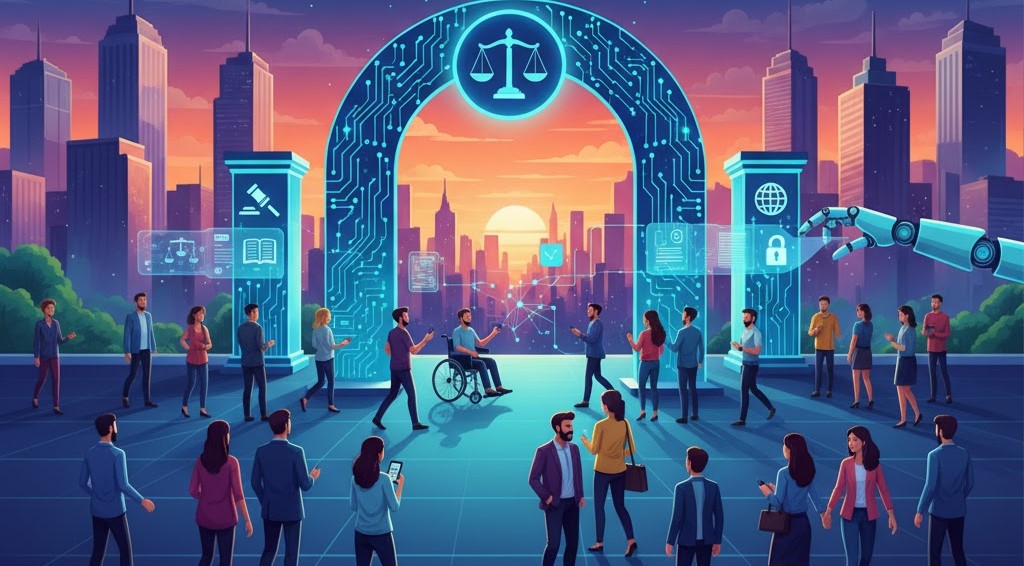
Using technology to improve people's ability to access the legal system and use it effectively
World over, legal systems face a pressing reality: vast numbers of people with valid legal claims or defences cannot meaningfully engage with the legal system to vindicate their rights. Closing this “access to justice gap” is a defining challenge for modern legal systems. Digital technologies offer powerful opportunities to meet the needs, but they also raise thorny new questions. This research project explores and evaluates the impact of digitalization and AI-powered innovation on access to justice and equitable delivery of legal services.
We evaluate both established and emerging justice-tech tools that are intended for use by self-represented individuals in courts, administrative agencies and legal help settings. Current tools include online guided-interview platforms that turn plain-language answers into tailored pleadings, remote proceedings that involve video, text or other virtual modes of interaction, and fully online court and dispute resolution systems (ODR) that combine various tools and procedural designs. Emergent AI-powered tools include machine-learning tools that triage claims and review documents, chatbots that deliver just-in-time legal information, generative AI that drafts arguments, spots evidentiary gaps or “translates” legalese into plain language, and litigation analytics software that provide case specific predictions and insights.
We measure accessibility, procedural justice, usability, accuracy, outcomes, equity, and efficiency impacts across diverse users and settings, producing evidence to guide product design, policy and regulation. In addition, we engage with doctrinal questions such as when does software guidance become unauthorized practice of law? What competence duties must legal aid lawyers and court personnel meet when delegating tasks to AI? How should regulators calibrate licensing, sandbox, or audit regimes to protect lay users without stifling innovation? Importantly, we also address the institutional plumbing that determines whether technology reforms succeed, by scrutinizing technological development and procurement processes in courts and administrative agencies and their interplay with questions of institutional independence, data governance, data interoperability, innovation, etc.
Cross cutting all these themes is a critical jurisprudential question: what is the impact of digital technologies and AI on the nature of legal systems and the law? Can technological transformation prompt us to reimagine how legal systems operate and serve the public altogether? By generating rigorous, policy-relevant insights and partnering with the judiciary, bar, technologists, and civil society, we aim not merely to study change but to shape it—so our digital legal future—in Israel and elsewhere—is more accessible, transparent, and fair for all.