


Barzilay's work also focuses on environmental history as a catalyst for social and cultural phenomena, in particular the study of water as a lens elucidating medieval daily life and ritual. One article, for example, uses visual sources and archival material to address the problems that changes to the public water system of Nuremberg posed for local Jews in the practice of their Passover rituals. This is part of a larger project demonstrating how environmental transformations, from climate change to the development of new urban infrastructure, carried significant implications for religious lay rituals and rites involving water. The High and Late Middle Ages saw rapid changes in the ways people obtained and used water, coupled with growing regulation of that usage. The project focuses on the intersections between the symbolic meanings and the material nature of water, through a study of its practical functions in lay ritual and everyday life. Barzilay's work within the Israeli Science Foundation (ISF) Research Team, 'Digging Deep: Interdisciplinary Study of the Medieval Mikveh in Cologne' follows this research avenue, in cooperation with Tanja Pothoff, Michael Wiehen and Christiane Twiehaus (MiQua, Köln) and Neta Bodner (The Open University of Israel).
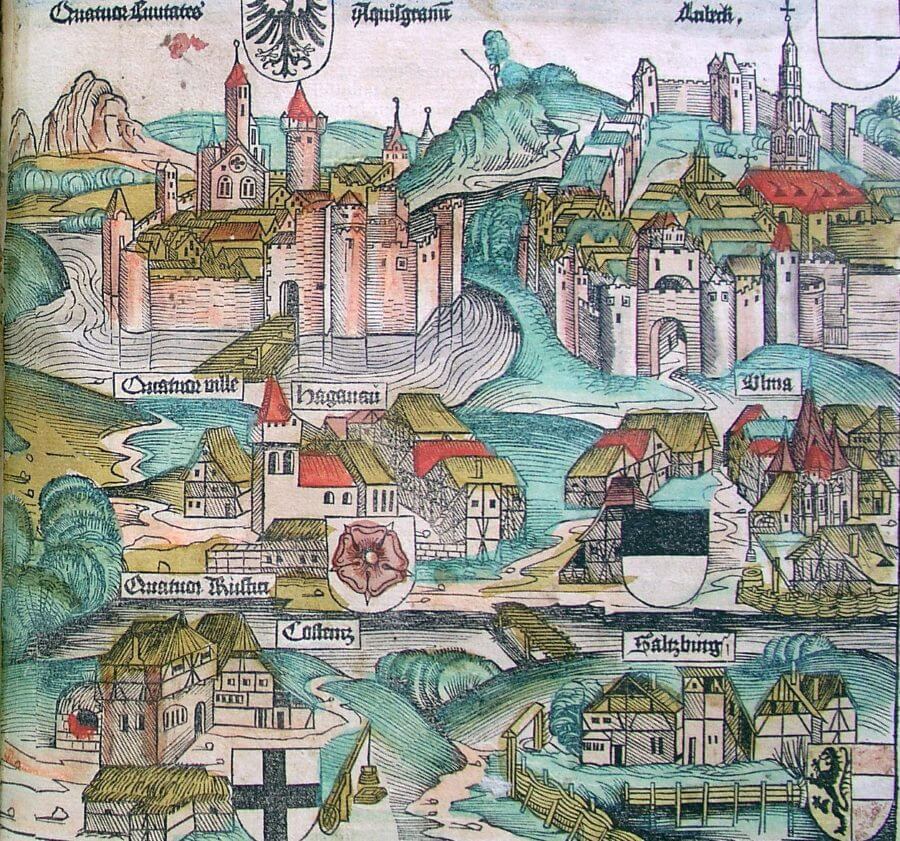
Image credit: Woodcut by Michel Wolgemut in Hartmann Schedel, Liber Chronicarum (Nürnberg, 1493), fols. 184v-185r. License: CC BY-NC 4.0