


Begin customizing your page to showcase your work, research, and achievements.

Ancient texts are unique evidence providing a glimpse into the thoughts, day-to-day life, and culture of people of long-gone eras. Paleography, the study of writing, aims at documenting the inscriptions, transliterating the texts, reconstructing their historical context, and studying the evolution of writing itself. The digital revolution gave rise to computational paleography, introducing new tools of data acquisition, image processing, and machine learning.
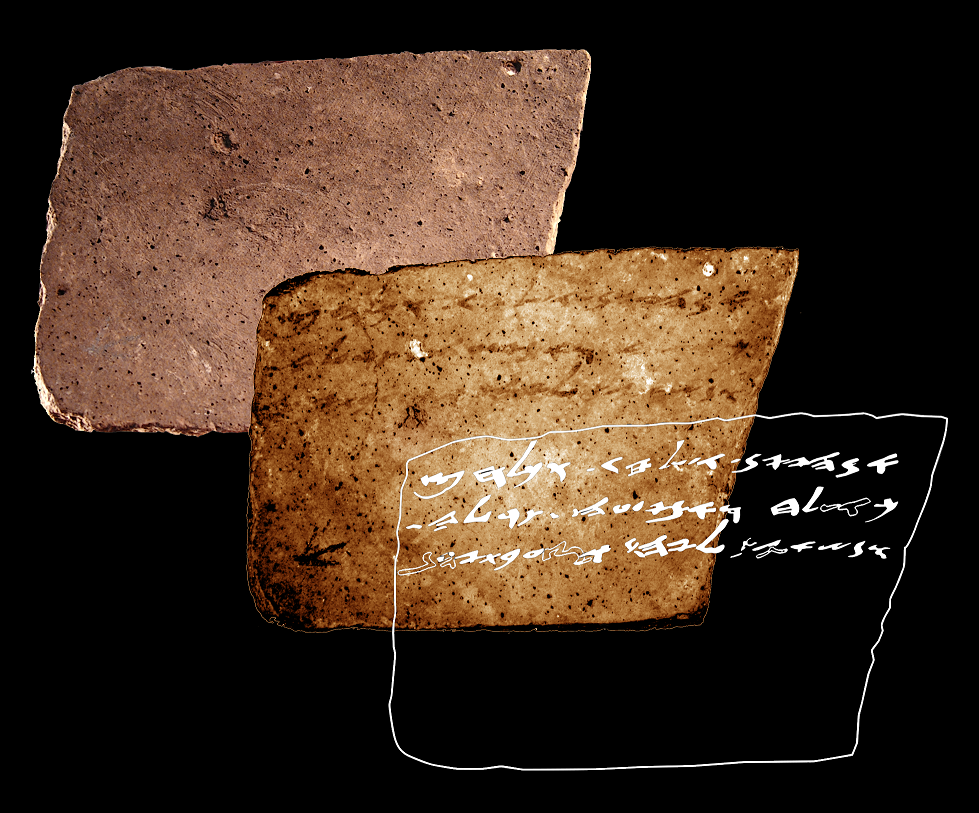
In this project, we studying the development of ancient Hebrew writing dating to First Temple Period. During the Computerized Paleography study, tools from the following fields were developed: Image Processing, Machine Learning, and Statistics. Our most prominent publications here were (a) finding empirical evidence of high literacy rates in the Kingdom of Judah on the eve of Nebuchadnezzar's destruction of Jerusalem (published in PNAS [10]) and (b) the discovery of a new inscription - using Multispectral imaging - on the back side of an existing one, which was situated for half a century in the Israel Museum (published in PLOS ONE - [15]). In addition, we conducted a side by side Forensic document examination [19]. For many other publications on this subject, see link
Handwriting Analysis
Handwriting is considered to be a unique "fingerprint" that characterizes a scribe. The distinct style of writing plays a significant role in identifying writers, tracking the evolution of the script, and dating of the inscriptions. Although classical paleography aims at answering these questions, computational handwriting analysis can supplement the traditional studies by providing efficient and statistically justified evidence, shedding light on long-debated historical questions. Among the main challenges of ancient handwriting analysis are the limited number of available documents (i.e., this is a case of "small" rather than "big data"), the lack of labeled reference data, as well as the poor preservation level of the documents. Due to these complexities, which vary across corpora, new analytical methods, not necessarily based on deep learning had to be developed. Once the letters are binarized we can turn to features extraction methodology (using SIFT, Zernike, DCT, Kd-tree, Image projections, L1, and CMI). Next, these features are combined into a single descriptor and combined. The final stage of the algorithm addressed the main question: "What is the probability that two given texts were written by the same author?" This was achieved by posing an alternative null hypothesis H0 ( "both texts were written by the same author") and attempting to reject it by conducting a relevant experiment. If its outcome was unlikely (P<0.2), we rejected the H0 and concluded that the documents were written by two individuals. Alternatively, if the occurrence of H0 was probable (P>0.2), we remained agnostic.
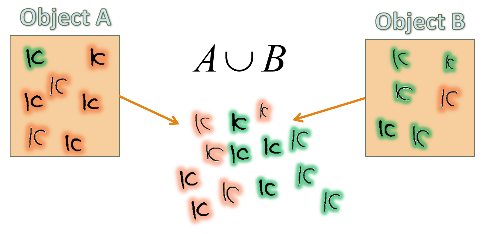
Image Acquisition
We examine how multispectral imaging can be used to document and improve reading of ancient inscriptions. The research focuses on ostraca, texts written in ink on ceramic potsherds. Three corpora of Hebrew ostraca dating to the Iron Age II were imaged in visible and near-infrared light using a state-of-the-art commercial spectral imager. To assess the quality of images, we used a new quality evaluation measure that takes into account various contrast and brightness transformations. We show that there exists a wavelength range where the readability of ostraca is enhanced. Moreover, we show that it is sufficient to use certain bandpass filters to achieve the most favorable image [2]. Later, in a paper published in PLOS ONE [15] we show a striking example of a hitherto invisible text on the back side of an ostracon was revealed via multispectral imaging. Our study paves the way towards a low-cost multispectral method of imaging ostraca inscriptions. Based on the results of the research a low-cost Multispectral system was constructed [23].
List of papers published during this project:
[23] Seeing the Invisible - Ostraca Hunting via Multispectral Imaging
Levy, E., Faigenbaum-Golovin, S., Piasetzky, E., Finkelstein, I.,
Semitic and Classical 15, 179-188, 2023.
[22] Analyzing Ancient Hebrew Inscriptions: Computational Paleography Survey
Faigenbaum-Golovin, S., Shaus, A., Sober, B.,
IEEE BITS the Information Theory Magazine, 2(1), 90-101, 2022.
[21] Literacy in Judah And Israel: Algorithmic and Forensic Examination of the Arad and Samaria Ostraca
Faigenbaum-Golovin, S., Shaus, A., Sober, B., Gerber, Y., Turkel, E., Piasetzky, E., Finkelstein, I.,
Near Eastern Archaeology, 84(2), 148-158, 2021.
[20] Arad Ostracon 24 Side A
Faigenbaum-Golovin, S., Finkelstein, I., Levy, E., Na'aman, N., Piasetzky, E.,
Semitica, 62, 43-68, 2020.
[19] Forensic document examination and algorithmic handwriting analysis of Judahite biblical period inscriptions reveal significant literacy level
Shaus, A., Gerber, Y., Faigenbaum-Golovin, S. Sober, B., Piasetzky, E., Finkelstein, I.,
PLOS ONE, 15(9), 2020.
[18] Algorithmic Handwriting Analysis of the Samaria Inscriptions Illuminates Bureaucratic Apparatus in Biblical Israel
Faigenbaum-Golovin, S., Shaus, A., Sober, B., Turkel, E., Piasetzky, E., Finkelstein, I.,
PLOS ONE, 15(1), 2020.
[17] Writer Characterization and Identification in Short Modern and Historical Documents: Reconsidering Paleographic Tables
Faigenbaum-Golovin, S., Levin, D., Piasetzky, E., Finkelstein, I.,
19th ACM Symposium on Document Engineering (DocEng2019), 2019.
[16] A Renewed Reading of Hebrew Ostraca from Cave A-2 at Ramat Beit Shemesh (Nahal Yarmut), Based on Multispectral Imaging
Mendel-Geberovich, A., Faigenbaum-Golovin, S., Shaus, A., Sober, B., Cordonsky, M., Piasetzky E., Finkelstein, I., Milevski I.,
Vetus Testamentum, 69(4-5), 682-701, 2019.
[15] Multispectral Imaging Reveals Biblical-Period Inscription Unnoticed for Half a Century
Faigenbaum-Golovin, S., Mendel-Geberovich, A., Shaus, A., Sober, B., Cordonsky, M., Levin, D., Moinester, M., Sass, B., Turkel, E., Piasetzky E., Finkelstein, I.,
PLOS ONE, 12(6), 2017.
[14] A Brand New Old Inscription: Arad Ostracon 16 Rediscovered via Multispectral Imaging
Mendel-Geberovich, A., Shaus, A., Faigenbaum-Golovin, S., Sober, B., Cordonsky, M., Piasetzky, E., Finkelstein, I.,
Bulletin of the American Schools of Oriental Research (BASOR), 378, pp. 31-34, 2017.
[13] Potential Contrast - a New Image Quality Measure
Shaus, A., Faigenbaum-Golovin, S., Sober, B., E. Piasetzky, Turkel, E.,
Proceedings of the IS&T International Symposium on Electronic Imaging 2017, pp. 52-28, 2017.
[12] Shedding Light on Iron Age Hebrew Ostraca via Modern Imaging and Computational Technologies
Faigenbaum-Golovin, S., Mendel-Geberovich, A., Shaus, A., Sober, B., Cordonsky, M., Levin, D., Moinester, M., Sass, B., Turkel, E., Piasetzky E., Finkelstein, I.,
TAU Archaeology, 3(12), 2017
[11] Statistical Inference in Archaeology: Are We Confident?
Shaus, A., Sober, B., Faigenbaum-Golovin, S., Mendel-Geberovich, A., Levin, D., Piasetzky E., Turkel, E.,
in: O. Lipschits, Y. Gadot, M. J. Adams eds., Rethinking Israel: Studies in the History and Archaeology of Ancient Israel in Honor of Israel Finkelstein,
Eisenbrauns, Winona Lake, 389-401, 2017.
[10] Algorithmic Handwriting Analysis of Judah's Military Correspondence Sheds Light on Composition of Biblical Texts
Faigenbaum-Golovin, S., Shaus, A., Sober, B., Levin, D., Na'aman, N., Sass, B., Turkel, E., Piasetzky, E., & Finkelstein, I.,
Proceedings of the National Academy of Sciences (PNAS), 113 (17), pp. 4664-4669, 2016.
[9] Facsimile Creation: Review of Algorithmic Approaches
Shaus, A., Sober, B., Faigenbaum-Golovin, S., Mendel-Geberovich, A., Piasetzky, E., Turkel, E.,
in: I. Finkelstein, C. Robin, T. Romer eds., Alphabets, Texts and Artefacts in the Ancient Near East, Studies Presented to Benjamin Sass, pp. 474-488, 2016.
[8] Multispectral Imaging of Tel Malhata Ostraca
Faigenbaum, S., Sober, B., Moinester, M., Piasetzky, E., Bearman, G.,
inTel Malhata: A Central City in the Biblical Negev, Itzhaq Beit-Arieh (ed), Tel Aviv, Tel Aviv University Monograph Series , 32, pp. 510-513, 2015.
[7] Computerized Paleographic Investigation Of Hebrew Iron Age Ostraca
Faigenbaum-Golovin, S., Shaus, A, Sober, B, Finkelstein, I., Levin, D., Moinester, M., Piasetzky, E., Turkel, E.,
Radiocarbon, Vol 57, Nr 2, pp. 317-325, 2015.
[6] The Ophel (Jerusalem) Ostracon in Light of New Multispectral Images
Faigenbaum-Golovin, S., Rollston, C.A., Piasetzky, E., Sober, B., Finkelstein, I.,
Semitica, Vol 57, pp. 113-137, 2015.
[5] Multispectral Imaging as a Tool to Enhance the Reading of Ostraca
Sober, B., Faigenbaum, S., Beit-Arieh, I., Finkelstein, I., Moinester, M., Piasetzky, E., Shaus, A.,
Palestine Exploration Quarterly, Volume 146, Issue 3 (2014), pp. 185-197, 2014.
[4] Multispectral Imaging of two Hieratic Inscriptions from Qubur el- Walaydah
Faigenbaum, S., Sober, B., Finkelstein, I., Moinester, M., Piasetzky, E., Shaus, A., Cordonsky, M.,
Egypt and the Levant, XXIV, pp. 349-353, 2014.
[3] Evaluating Glyph Binarizations Based on Their Properties
Faigenbaum, S., Shaus, A., Sober, B., Turkel, E., Piasetzky, E.,
13th ACM Symposium on Document Engineering (DocEng2013), 2013
[2] Multispectral Images of Ostraca: Acquisition and Analysis
Faigenbaum, S., Sober, B., Shaus, A., Moinester, M., Piasetzky, E., Bearman, G., Cordonsky, M., Finkelstein, I.,
Journal of Archaeological Science, Vol. 39, Issue 12, 2012, pp. 3581-3590, 2012.
[1] Reconstructing Ancient Israel: Integrating Macro- and Micro-archaeology
Finkelstein, I., Boaretto, E., Ben Dor Evian, S., Cabanes, D., Cabanes, M., Eliyahu, A., Faigenbaum, S., Gadot, Y., Langgut, D., Martin, M., Meiri, M.,
Namdar, D., Sapir-Hen, L., Shahack-Gross, R., Shaus, A., Sober, B., Tofollo, M., Yahalom-Mack, N., Zapassky, L., Weiner, S.,
Hebrew Bible and Ancient Israel, Vol 1, 2012, pp. 133-150, 2012.