


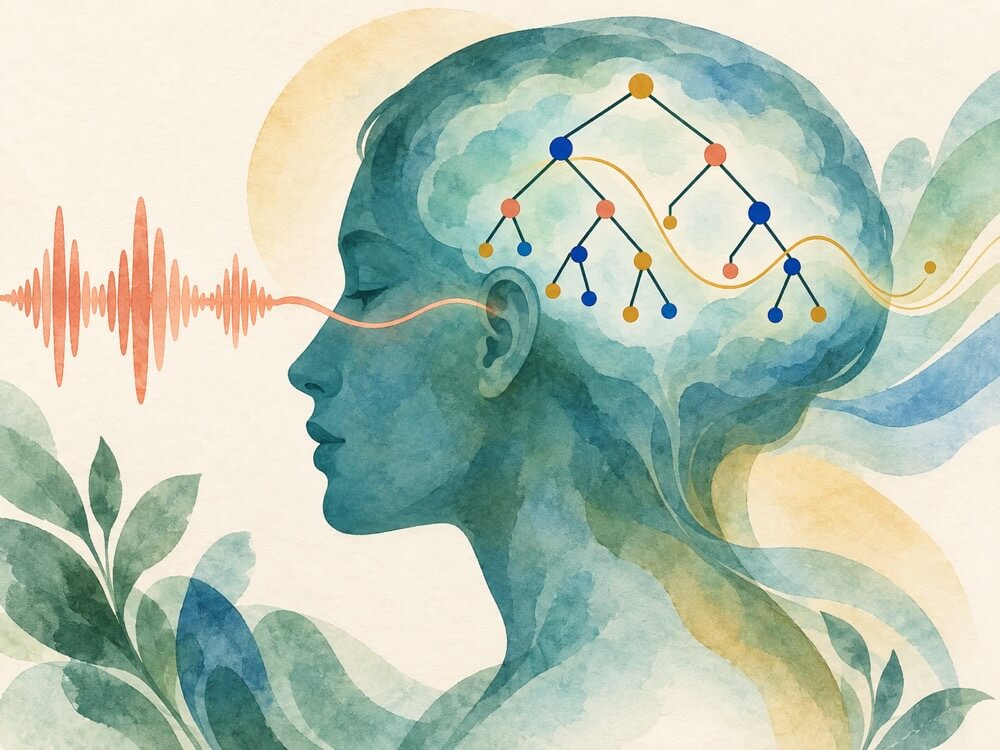
How does the brain make sense of speech as it unfolds?
Spoken language rarely arrives in neat, complete sentences. We hesitate, repeat ourselves, change direction halfway through—and somehow, our listeners usually keep up. In our lab, we investigate how the brain turns this continuous, sometimes messy stream of speech into structure and meaning.
We combine linguistic theory, computational modeling, and brain recordings using EEG and fMRI to study speech comprehension in healthy adults. We ask how listeners build syntactic structure as speech unfolds, how they use prosody—the rhythm and melody of speech—and what happens when these sources of information pull in different directions.
Our models capture different aspects of speech, from grammatical structure and prosodic cues to predictions and representations derived from large language models. By relating these measures to brain activity, we investigate how these sources of information contribute to understanding speech in real time.