


DATE: July 16, 1961
ROUTE: Moscow to Kiev
LANGUAGE: Hebrew
SOURCE: Center for the Studies of History and Culture of East European Jewry (Judaica Center)
Rg:
ASSOCIATES:
SUBJECTS:
Druker's monograph Der zeyde Mendele (Warsaw, 1964)
Druker's disapproval of Sovetish Heymland
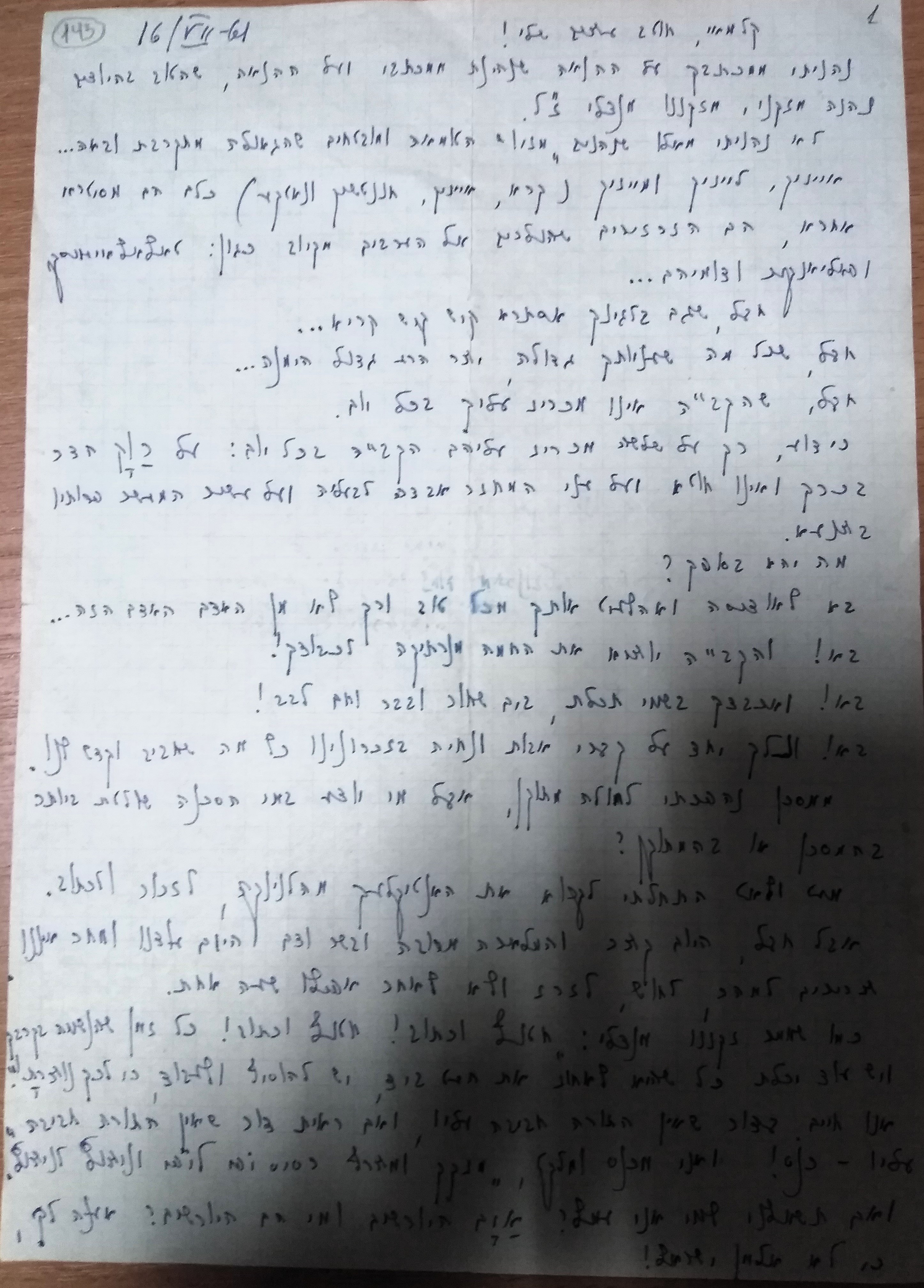
קלימאי,[1] חוטב עצים שלי!
נהניתי ממכתבך על ההנאה שנהנית ממכתבי ועל ההנאה, שהטוב בהיודעים נהנה מזקני, מזקננו מנדלי ז"ל.
לא נהניתי מאלו שנהנים "מזיו" הטומאה ומובטחים שהגאולה מתקרבת ובאה…[2]
אייזיק, לייזיק ומייזיק (קרא, אייזיק, חננטשיק ונאטקע) כלם הם מסיטרא אחרא, הם הזרזירים שהולכים אל הערבים[3] מקיוב כגון: טאלאלאיעווסקי ופאליאנקער ודומיהם…
חבל, שגם בלגינך אסתרא קיש קיש קריא…[4]
חבל, שכל מה שהנאתך גדולה, יצר הרע גדול הימנה…[5]
חבל, שהקב"ה אינו מכריז עליך בכל יום.[6]
כידוע, רק על שלשה מכריז עליהם הקב"ה בכל יום: על רַוָק הדר בכרך ואינו חוטא ועל עני המחזיר אבדה לבעליה ועל עשיר המעשר פרותיו בצנעא.
מה יהא בסופך?
בא לאודעסה ואהלעיט אותך מכל טוב ורק לא מן האדם האדם הזה…[7]
בא! והקב"ה יוציא את החמה מנרתיקה[8] לכבודך!
בא! ואכבדך בשמי תכלת, בים שחור ובבר וחם לבב!
בא! ונלך יחד על קברי אבות ונחיה בזכרונינו כל מה שחביב וקדש לנו.
ממסכן נהפכתי לחולה מתוקן, אבל מי יודע במי הסכנה שולטת ביותר בהמסכן או בהמתוקן?
מעט ולאט התחלתי לקרוא את האנטיקלעך מהלנינקה, לזכור ולכתוב.
אבל חבל, היום קצר והמלאכה מרובה[9] ובשר ודם היום עודנו ומחר איננו,[10] צריכים למהר, לחוש, לזרז ולא לאחר אפילו שעה אחת.
כמו שאמר זקננו מנדלי: "חטוף וכתוב! חטוף וכתוב! כל זמן שהנשמה בקרבך ויש עוד יכלת כל שהיא לאחוז את העט ביד, יש להוסיף ולעבוד כי לכך נוצרת!"
אנו חיים בדור שאין התורה חביבה עליו, ואם ראית דור שאין התורה חביבה עליו – כנס![11] ואני מכנס ומלקט, "מזקק ומצרף רסיס יֹפי ליֹפי וניצוץ לניצוץ".
ואם תשאלני למי אני עמל?[12] אַיָם היורשים ומי הם היורשים? אענה לך, כי לא אלמן ישראל![13]
כי כדאי וכדאי אפילו בשביל השבלים הבודדות, בשביל אחד בעיר ושנים במדינה.[14]
כשבאו ללוי יצחק מברדיצוב ואמרו לו – תורה מה תהא עליה? ענה ואמר: כשישארו חס ושלום, אפילו שני יהודים פשוטים, אחד יעורר והשני יתעורר ורץ כצבי לעבודת הבורא.
אומרים: אין יהלם מושלם בלי שפשוף ואין אדם מושלם בלי נסיון. וזהו אמת. הנסיונות למדו אותי הרבה, שנו אותי והחזירו למוטב. ונפשי כעת איננה כמזוזה שנמחק לה שדי. עטי אינו כוזב ואינו בודה.
גם אני "געלטלאזיק" ובכל זאת מה טוב חלקי, שעובד אני כעת באמונה את אלהי לבבי.
מה נעים גורלי שאיני שואל כעת לאן? איני שואל, כי סבל ירושה לי כי שרש לי בארץ, אהל ויתד, גזע ועם, עבר ועתיד.
רשות הרבים לא בלע את רשות היחיד שלי. כרמי שלי נטרתי!..[15]
מתי יופיע ספרך? ספרי יופיע לשנה הבאה.
היה שלום ובריא. הצרנובילר זכותו יגן עלינו אמר: בראשית ברא – ראשית כל חיב אדם להיות בריא.
ועוד אמר הא זעמליאק [земляк] שלי, ר' נחום מצרנוביל, אסור לדאוג. רק דאגה אחת מותרת והיא הדאגה על הדאגה…
אל יפל רוחך!
ענני! ענני! כתב! מחכה אני למכתבך.
הקלימאי והחוטב עצים שלך
ירמיהו בן חיים הכהן
[1] Kalimai sheli – My man from Kolyma, a hint at the shared Gulag experience in the Kolyma region (Russian North-East).
[2] Hageula mitkarevet ubah – The approaching future redemption, a sarcastic hint at the first issue of the Moscow by-monthly Sovetish Heymland (July-August 1961) under Aron Vergelis' editorship
[3] Hazarzirim… – The starlings go with the crows, a negative Talmudic expression (BT, Bava kama 92b), which means that a person will join a crowd where it feels comfortable.
[4]Istra balagina kish kish karya – A hollow barrel makes more noise (than a full), a negative Talmudic expression (BT, Bava metzia 75b), i.e. the voices of stupid people are louder than those of smart ones.
[5]Yetser hara gadol himena – Anyone who is greater than another, his evil inclination is greater than his (BT, Sukka 52a).
[6]Eyno makhriz… – R. Yochanan said: There are three kinds of people whose praise the Holy One, blessed be He, proclaims every day: A bachelor who lives in a large city and does not yield to the temptations of immorality; a poor person who returns a lost article to its owner; and a wealthy person who tithes his produce in private (BT, Pesachim 113a).
[7]Min haadom haadom haze – And Esau said to Jacob, "Pour into [me] some of this red, red [pottage] (Gen. 25:30). Again, a hint to the "red" orientation of the Yiddish culture Sovetish Heymland style.
[8]Hama minartika… – Rabbi Shimon ben Lakish said, “there is no hell in the world to come. Rather God takes the sun out of its canopy; the righteous are healed by it and the wicked are punished by it” (BT, Nedarim 8b).
[9]Hayom katsar… – Rabbi Tarfon said: the day is short, and the work is plentiful (Avot 2:15).
[10]Hayom odeno… – Today [we are] still here and tomorrow [we are] gone (IT, Sanhedrin 6:10).
[11]Dor sheeyn hatora haviva alav – kanes – If you see a generation for whom Torah is not beloved, gather (BT, Berakhot 63a).
[12]Lemi ani amel – For whom do I toil and deprive my soul of pleasure? (Eccl. 4:8). With the words "For whom do I toil?" Yehuda Leib Gordon (1830–1892) titled his famous Hebrew poem, directed against assimilationist tendencies.
[13]Ki lo alman… – For Israel is not widowed (Jer. 51:5).
[14]Ehad bair… – I will take you, one from a city and two from a family, and I will bring you to Zion (Jer. 3:14).
[15]Karmi sheli – My own vineyard I did not keep (Song of Songs 1:6). Druker says he does keep his vineyard.
CONTENTS
The letter responds to Zabara’s positive reaction to Druker’s forthcoming monograph on Mendele Mokher Sforim. At the time, Druker was recovering from a serious operation and spending time at the Lenin State Library.
The main theme of the letter, however, is his disapproval of the new Yiddish bimonthly Sovetish Heymland, the first issue of which was already being prepared in Moscow under the editorship of Arn Vergelis. Without mentioning either the journal or its editor by name, Druker condemns those who supported this initiative—which he contemptuously calls “the glow of impurity”—including his close associates from Odessa: Ayzik Huberman, Khone Vaynerman, and Note Lurye, as well as the Kiev writers Motl Talalayevski, Hershl Polyanker, and, it seems, Zabara himself.
He invites Zabara to Odessa for a serious conversation. Alluding to their shared Gulag experience in Kolyma (the Russian North-East), he expresses his writer’s credo with striking clarity: “My soul is not like a mezuzah, from which the name of the Almighty has been erased; my pen does not lie; the common atmosphere has not engulfed my personality; I have preserved my vineyard” (An allusion to the “Song of Songs”).