


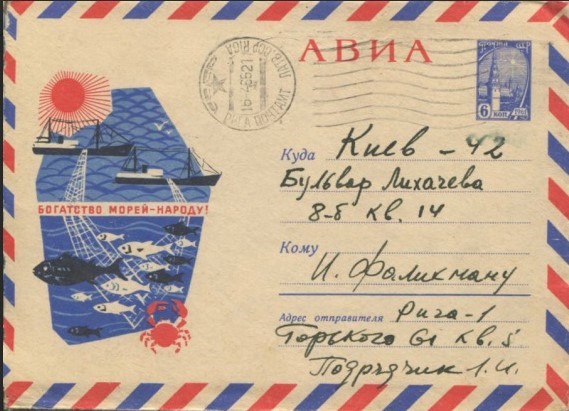
DATE: Jun 18, 1966 (dated due to the postmark)
ROUTE: Riga to Kiev
LANGUAGE: Yiddish in Soviet orthography with Hebrew abbreviations
SOURCE: Center for the Studies of History and Culture of East European Jewry (Judaica Center)
ASSOCIATES:
SUBJECTS:
Falikmans’s novel Der shvartser vint [The Black Wind]
Falikman's novel Di shayn kumt fun mizrekh [The Light Comes from the East]
Schwarz-Bart’s novel Le dernier des Justes [The Last of the Just]
כאָשעווער כאווער פאליקמאן!
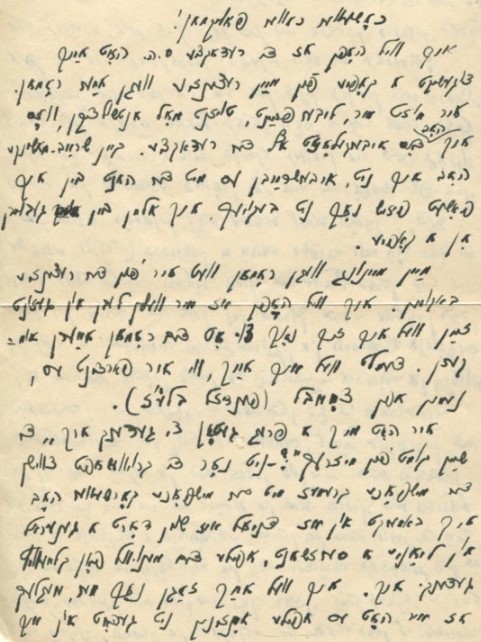
איך וויל האָפן אז די רעדאקציע ס.ה. האָט אײַך צוגעשיקט א קאָפּיע פון מײַן רעצענזיע וועגן אײַער ראָמאן. איר מוזט מיר, ליבער פרײַנט, טויזנט מאָל אנטשולדיקן, וואָס איך האָב דאָס איבערגעלאָזט אף דער רעדאקציע. קיין שרײַב־מאשינקע האָב איך ניט, איבערשרײַבן עס מיט דער האנט בין איף פּאָשעט פיזיש ניט בעקויעך. איך אליין בין געבליבן אָן א קאָפּיע.
מײַן מיינונג וועגן ראָמאן וועט איר פון דער רעצענזיע באקומען. איך וויל האָפן אז מיר וועלן לעבן און געזונט זײַן, וועל איך זיך נאָך צו דעם ראָמאן אײַערן אומקערן. דעמלט וועל איך אײַך, ווי איר פארדינט עס, נעמען אפן צאָמבל (פענדזל בלע"ז).
איר האָט מיך א פרעג געטאָן, צי געדענק איך "די שײַן קומט פון מיזרעך"? – ניט נאָר די קרויוועשאפט צווישן דער מישפּאָכע קרעוועז מיט דער מישפּאָכע קאָרשעווער האָב איך באמערקט און אז דניאל איז שוין דאָרט א גענעראל און ליאָניע א סערזשאנט, אפילע דעם מענוּוול פאָן קלייעוויץ געדענק איך. איך וועל אײַך זאָגן נאָך מער, מעגלעך אז איר האָט עס אפילע אין זינען ניט געהאט און איך אלס קריטיקער, אויב איך קאָן זיך פאר אזעלכן באנענען, בעכאָל אויפן ווי אן אופמערקזאמער לייענער, האָב עס באמערקט:
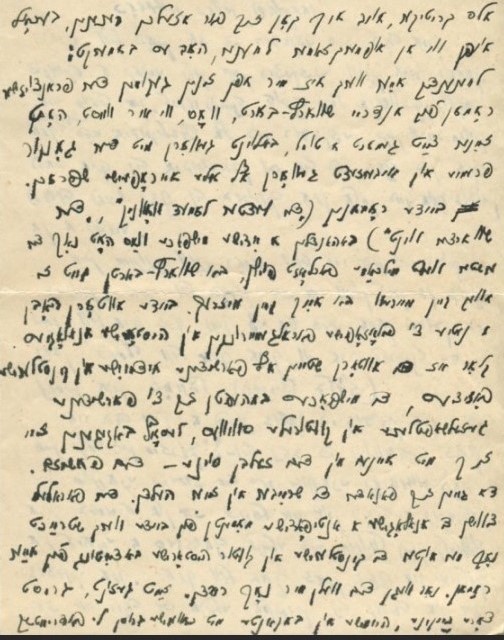
לייענענדיק אײַער ווערק איז מיר אפן זינען געקומען דער פראנצויזישער ראָמאן פון אנדריי שווארץ-בארט, וואָס, ווי איר ווייסט, האָט זײַנער צײַט געמאכט א טומל, באלוינט געוואָרן מיט דער גאָנקור־פּרעמיע און איבערגעזעצט געוואָרן אף אלע אייראָפעיִשע שפּראכן.
ביידע ראָמאנען ("די שײַן קומט פון מיזרעך", "דער שווארצער ווינט") באהאנדלען א ייִדישע מישפּאָכע, וואָס נאָך דער ערשטער וועלט־מילכאָמע פארלאָזט פּוילן. בא שווארץ־בארטן גייט זי אוועק קיין מײַרעוו, בא אײַך – קיין מיזרעך. ביידע אווטאָרן האָבן א נעטיִע צו פילאָזאָפישע פאראלגעמיינערונגען און היסטאָרישע אנאלאָגיעס. קלאָר, אז די אווטאָרן שטייען אף פארשיידענע אידיייִשע און קינסטלערישע פּאָזיציעס, די מישפּאָכעס באהעפטן זיך צו פארשיידענע געזעלשאפטלעכע און קולטורעלע סוויוועס, לעסאָף באגעגענען זיי זיך מיט איינעם און דעם זעלבן סוינע – דעם פאשיזם. דאָ גייען זיך פאנאנדער די שרײַבער און זייערע העלדן. דער פּאראלעל צווישן די אנאלאָגישע א[ון] אנטיפּאָדישע מאָמענטן פון ביידע ווערק שטרײַכט נאָך מער אונטער די קינסטלערישע און קולטור־היסטאָרישע באדײַטונג פון אײַער ראָמאן. נאָר וועגן דעם וועלן מיר נאָך רעדן.
זײַט געזונט, גריסט דאָרע כײַקינע, היימישע און באקאנטע מיט כאווערישע גרוסן.
פּ.ס. נעמט ניט פאר אומגוט מײַן "פלעקל"־שריפט. די הענט ציטערן נאָך און די ריִע פירט אונטער.
הנ"ל
CONTENT
The Soviet (since 1971 Israeli) Yiddish literary critic, teacher and bibliographer Leyzer Podryatshik from Riga expresses his hope that the editorial board of Sovetish Heymland has forwarded to Falikman (who was a member of the SH editorial board) his review on the latter’s novel Der shvartser vint [The Black Wind].
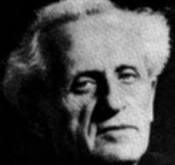
Podryatshik compares Falikman’s new novel to his previous work, Di shayn kumt fun mizrekh [The Light Comes from the East], and points out that both books remind him of André Schwarz-Bart’s post-war novel Le dernier des Justes [The Last of the Just].
The sender sends his kindest regards to Falikman’s wife, the Yiddish writer Dore Khaykin (1913-2006). At the end he apologizes for his poor handwriting due to shaky hands and deteriorating eyesight.
FACTS AND EVENTS
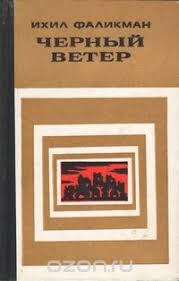
Falikman’s novel Der shvartser vint [The Black Wind] deals with the Holocaust. Its original Yiddish text was serialized in Sovetish Heymland in 1966-68. It was published in a book form in Moscow in the Russian translation by Irina Savenko and Dore Khaykin in 1968 and again in 1974.
Facts and Events (continued)
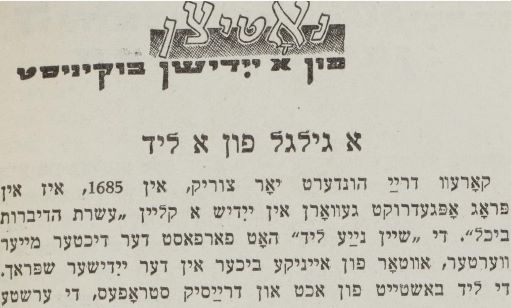
Podryachik's column in Sovetish Heymland
The first paragraph of the letter contains a glaring testament to the squalid conditions under which Yiddish writers worked in the USSR: Podryachik, who ran the Notitsn fun a Yidishn Bukinist [Notes of a Jewish Second-Hand Bookseller] column in the magazine, possessed neither Yiddish typewriter nor copying machine, so he had to left an only handwritten copy of his book review with the editorial office.
Di shayn kumt fun mizrekh [Light comes from the East] is Falikman's previous novel about the uprising in the Warsaw ghetto (published in Yiddish in Moscow in 1948, second edition - Buenos Aires, 1951).
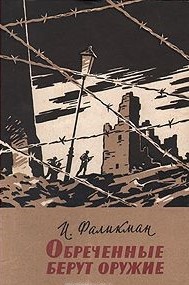
In Russian (Moscow, 1959) and Ukrainian (Kiev, 1962, 1973) translations the book bears a different title: “The Doomed Take Up Arms”.
![Schwarz-Bart’s novel Le Dernier des justes [The Last of the Just]](/sites/default/files/inline-images/schwarzbart-theLast.jpg)
André Schwarz-Bart’s novel Le Dernier des justes [The Last of the Just], based the story on the medieval massacre of Jews in York and chronicling the life of a Jewish family from the 12th century till the Holocaust, originally appeared in French in 1959. It was published in an English translation by Stephen Becker in 1960. This debut novel of Schwarz-Bart (the son of a Polish Jewish family) won the Prix Goncourt, France's highest literary prize. However, this book remained almost unknown to the Soviet reader.
Podryachik's column in Sovetish Heymland
The first paragraph of the letter contains a glaring testament to the squalid conditions under which Yiddish writers worked in the USSR: Podryachik, who ran the Notitsn fun a Yidishn Bukinist [Notes of a Jewish Second-Hand Bookseller] column in the magazine, possessed neither Yiddish typewriter nor copying machine, so he had to left an only handwritten copy of his book review with the editorial office.
Di shayn kumt fun mizrekh [Light comes from the East] is Falikman's previous novel about the uprising in the Warsaw ghetto (published in Yiddish in Moscow in 1948, second edition - Buenos Aires, 1951).
In Russian (Moscow, 1959) and Ukrainian (Kiev, 1962, 1973) translations the book bears a different title: “The Doomed Take Up Arms”.
André Schwarz-Bart’s novel Le Dernier des justes [The Last of the Just], based the story on the medieval massacre of Jews in York and chronicling the life of a Jewish family from the 12th century till the Holocaust, originally appeared in French in 1959. It was published in an English translation by Stephen Becker in 1960. This debut novel of Schwarz-Bart (the son of a Polish Jewish family) won the Prix Goncourt, France's highest literary prize. However, this book remained almost unknown to the Soviet reader.