


DATE: Sep 15, 1956
ROUTE: Birobidzhan to Boyarka
LANGUAGE: Yiddish (Soviet orthography)
SOURCE: Center for the Studies of History and Culture of East European Jewry (Judaica Center)
Rg: 111
ASSOCIATES:
SUBJECTS:
Birobidzhan
Gulag
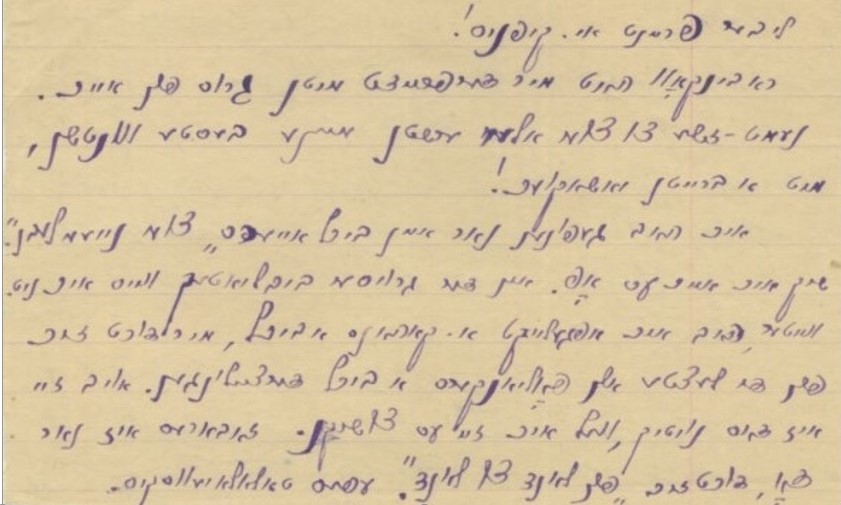
ליבער פרײַנט אי. קיפּניס!
ראבינקאָוו האָט מיר דערפרייט מיטנ גרוס פונ אײַכ. נעמט זשע צו צומ אלעמ ערשטנ מײַנע בעסטע וווּנטשנ, מיט א ברייטנ יאשאקויעכ [יִשַּׁר כּוֹחַ]!
איכ האָב געפונענ נאָר איינ ביכל אײַערס "צומ נײַעמ לעבנ". שיק איכ אײַכ עס אָפּ. אינ דער גרויסער ביבליִאָטעק ווייס איכ ניט. ווײַטער האָב איכ אָפּגעלייגט א. גאָרדאָנס א ביכל, מיר דוכט זיכ פונ די לעצטע, אונ פּאָליאנקערס א ביכל דערציילונגענ. אויב זיי איז דאָס נייטיק, וועל איכ זיי צושיקנ. זאבארעס איז נאָר דאָ, דאכט זיכ, "פונ לאנד צו לאנד". עפּעס טאלאלאיעווסקיס.
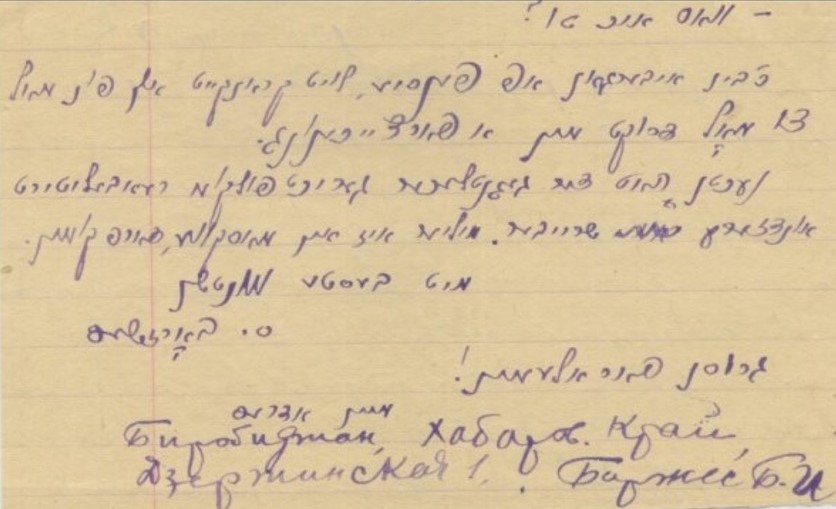
וואָס איכ טו?
כ'בינ איבערגעגאנ אפ פּענסיע לויט קראנקײַט אונ פונ מאָל צו מאָל דרוקט מענ א פארצייכענונג.
נעכטנ האָט דער געגנטלעכער געריכט פולקומ רעאביליטירט אונדזערע שרייבער. מילער איז אינ מאָסקווע, דארפ קומענ.
מיט בעסטע גרוסנ,
גרוסן פאר אלעמען!
מײַן אדרעס: ...
CONTENT
The Birobidzhan-based Yiddish writer Salvador Borzhes sends to Itsik Kipnis who was released from imprisonment in the end of 1955 (Kipnis was allowed to return to Ukraine, but not to Kiev, and lived at that moment in the small nearby town of Boyarka) regards from another Birobidzhan Yiddish writer, Heshl Rabinkov, who was also released from Gulag and returned to Birobidzhan. Borzhes reports that he has found only one book by Kipnis: Tsum nayem lebn [Toward a New Life], and he is sending it to the addressee. He also reports on the results of his search for other Yiddish books Kipnis inquired about - by Elye Gordon, Hershl Polyanker, Natan Zabara, and Motl Talalayevski.
The key phrase of the letter: Yesterday the court of the Jewish Autonomous Region totally rehabilitated our writers. Almost all the Birobidzhan Yiddish writers (Heshl Rabinkov, Buzi Miler, Yisroel Emiot, Ber Slutski, Luba Wasserman) were arrested in 1949. On September 14, 1956, the Court of the Jewish Autonomous Region rehabilitated all these writers for lack of corpus delicti.
Borzhes reports that he has recently retired because of some disease, but goes on to publish literary sketches. He also mentions the Birobidzhan Yiddish writer Buzi Miler who went to Moscow in 1957.
FACTS AND EVENTS
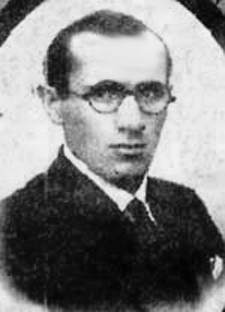
(1900-1974)
Salvador Borzhes was born as Betsalel Borodin in a shtetl of Rozhyshche (now in Ukraine). In the late 1920s or in 1930 he emigrated to Brazil, where he began to write under the penname Salvador Borzhes. In 1935, he settled in Birobidzhan and received the Soviet citizenship.
Borzhes was not arrested in 1949, but was instead dismissed from his job.
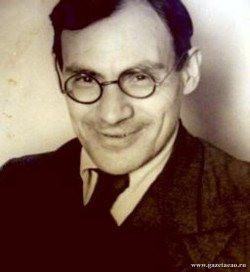
(1908-1981)
Heshl Rabinkov published short stories, novellas, dramas, and articles in the local newspapers and magazines. He was arrested in 1949, and in 1950 he was sentenced to 10 years in camps under Clause 5-10: agitation or call to overthrow the state system.
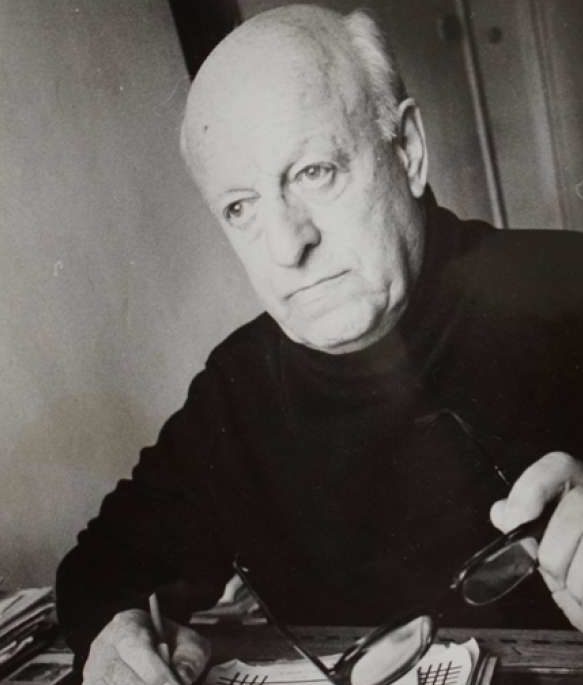
(1913-1988)
Buzi Miler mentioned by Borghes, went to Moscow shortly after his rehabilitation, to promote the publication of his collection of stories in translation from Yiddish into Russian. The book, Pod radugoi: povest’ i rasskazy (Under the Rainbow: A Novella and Short Stories), one of the first publications by Soviet Yiddish writers who had returned from imprisonment in the mid-1950s, was published in Moscow in 1959 and became a kind of official stamp of Miler’s rehabilitation.
Buzi Miller/Miler (1913-1988) was born as Ber Meyler on April 21, 1913 in the town of Kopai in Ukraine. He was a student and then a worker in Kharkov. In 1936 he graduated from the Moscow pedagogical institute named and was sent to work in Birobidzhan. Since then, his life has been linked to the Jewish autonomy in the Far East. He died in Birobidzhan on January 25, 1988.
For more details, see the book Kotlerman, Ber. Broken Heart / Broken Wholeness: The Post-Holocaust Plea for Jewish Reconstruction of the Soviet Yiddish Writer Der Nister. Boston: Academic Studies Press, 2017.
The other Yiddish Soviet writers mentioned in the letter are Elye Gordon, Hershl Polyanker, Natan Zabara and Motl Talalayevsky.
Borges informs that he has found the book: Itsik Kipnis, Tsum nayem lebn [To the New Life]. Kiev: Melukhe-farlag, 1940.
By “the big library” the sender obviously means the Moscow Lenin Library (nowadays The Russian State Library). The address of its main building is: Pashkov House, Mokhovaya St. 3, Moscow.
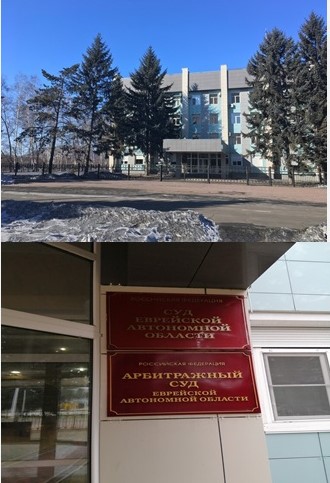
The Court of the Jewish Autonomous Region is currently situated on Teatralny pereulok, 10, Birobidzhan. There is no sign in Yiddish.
Buzi Miller/Miler (1913-1988) was born as Ber Meyler on April 21, 1913 in the town of Kopai in Ukraine. He was a student and then a worker in Kharkov. In 1936 he graduated from the Moscow pedagogical institute named and was sent to work in Birobidzhan. Since then, his life has been linked to the Jewish autonomy in the Far East. He died in Birobidzhan on January 25, 1988.
For more details, see the book Kotlerman, Ber. Broken Heart / Broken Wholeness: The Post-Holocaust Plea for Jewish Reconstruction of the Soviet Yiddish Writer Der Nister. Boston: Academic Studies Press, 2017.
The other Yiddish Soviet writers mentioned in the letter are Elye Gordon, Hershl Polyanker, Natan Zabara and Motl Talalayevsky.
Borges informs that he has found the book: Itsik Kipnis, Tsum nayem lebn [To the New Life]. Kiev: Melukhe-farlag, 1940.
By “the big library” the sender obviously means the Moscow Lenin Library (nowadays The Russian State Library). The address of its main building is: Pashkov House, Mokhovaya St. 3, Moscow.
The Court of the Jewish Autonomous Region is currently situated on Teatralny pereulok, 10, Birobidzhan. There is no sign in Yiddish.